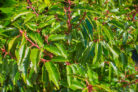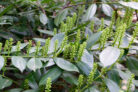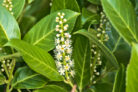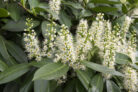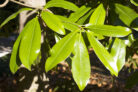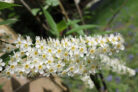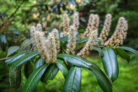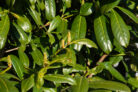
If you spot holes in your plant’s leaves, your first instinct is probably to blame hungry pests. But when it comes to Cherry Laurel, those holes are usually a sign of a deeper health issue rather than bugs. Don’t worry, though—I’ll walk you through how to identify the problem and get your shrubs back to looking their best.
There are two main culprits to look out for:
- Shot hole disease (a fungal infection)
- Bacterial leaf spot (caused by *Pseudomonas syringae*)
How to Spot Shot Hole Disease
Does your Cherry Laurel look like it’s been used for target practice? If the leaves are riddled with tiny holes, you’re likely dealing with a fungal infection commonly known as “shot hole disease.” It usually starts with small reddish tints on the leaves, which then turn into brown spots. Eventually, the tissue in those spots dies and drops out, leaving the signature “shot” look. This fungus is a tough customer and can even survive through the winter, so waiting for spring won’t solve the problem.
If the damage is limited to just a few areas, you can prune away the affected branches—just make sure to cut back until you hit healthy wood. Be careful with the scraps! You should burn the infected cuttings or seal them in a yard waste bin to prevent the fungus from spreading through your garden. If the infection has really taken hold, you might need to use a fungicide, or you can try a natural home remedy like a strong onion or garlic spray.
Identifying and Treating Bacterial Infections
The bacterium *Pseudomonas syringae* is another common troublemaker for Cherry Laurels. You’ll recognize this by circular patches of dying tissue on the leaf surfaces. This bacteria loves cold, wet weather, as it needs moisture to travel across the plant. Just like with the fungus, your best bet is to prune away the infected sections entirely. For a more heavy-duty fix, copper-based treatments are very effective at keeping these bacteria in check.
Keep in mind that not all Cherry Laurel varieties are created equal. Some types are naturally resistant to these fungi and bacteria. Depending on which variety you choose for your yard, you might never have to deal with these “holy” leaves at all!