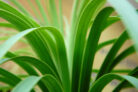
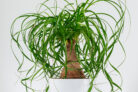
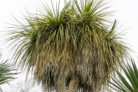
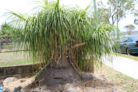
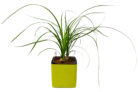
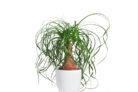
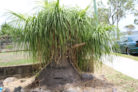
With its long, flowing leaves, the Ponytail Palm makes quite a statement in any room. On smaller plants, those leaves sprout like a wild green mane from the top of its signature “bottle-neck” trunk. But when those leaves start looking limp and lifeless, your plant can go from looking majestic to looking pretty miserable.
Not all “drooping” is bad news
The botanical name for this plant is *Beaucarnea recurvata*, and that second word, *recurvata*, actually means “curved back.” It’s also why we call it the Ponytail Palm—the leaves are supposed to arch gracefully like a ponytail. So, keep in mind that a certain amount of “hang” is just the plant’s natural look.
If your Ponytail Palm is happy and healthy, the leaves will arch out in a full, bouncy curve. However, if the leaves are hanging flat, looking shriveled, or kinking right against the trunk, your plant is asking for help. Before you start panicking, you need to figure out what’s causing the slump. Usually, it’s one of these four culprits:
- Not enough light
- Thirst (underwatering)
- Root damage
- Winter temperature swings
Not enough light
To really thrive, a Ponytail Palm needs plenty of space and a very bright, sunny spot. This usually isn’t an issue in the summer, but you should double-check your plant’s “real estate” once the days get shorter. If its spot gets too dark in the late fall or winter, the leaves will start to droop. If that happens, it’s time to move your leafy friend to a sunnier window.
Thirst
While it’s true that Ponytail Palms handle drought much better than soggy soil, even the toughest plants have their limits. If it goes too long without a drink, the leaves will start to sag. The good news? This is an easy fix. Give it a good watering, and you’ll usually see it perk back up to its full glory within a few hours.
Root damage
If the roots have been damaged—usually from sitting in “wet feet” (standing water)—they can’t pull up the nutrients the plant needs. This saps the plant’s energy, causing the leaves to go limp. Since root rot can be a death sentence for houseplants, you’ll want to act fast. Your best bet is to repot your Ponytail Palm into fresh, well-draining soil immediately.
Winter temperature swings
Ponytail Palms can be a bit “dramatic” when it comes to winter drafts and sudden temperature changes. If it gets hit by a cold breeze, it might act insulted and let its leaves droop. If the situation doesn’t improve, that “diva” behavior can turn into a real problem. You might start seeing yellow leaves that eventually fall off entirely.