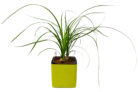
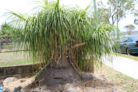
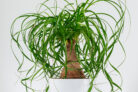
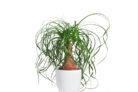
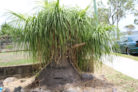
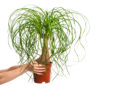
The Ponytail Palm (botanical name *Beaucarnea recurvata*) is one of those tough-as-nails houseplants that’s incredibly easy to care for. Because it’s so low-maintenance, the biggest danger is actually “smothering” it with too much love—specifically, overwatering.
What exactly counts as “too much”?
It’s surprisingly easy to overdo it with a Ponytail Palm because these guys store water in their bulbous trunks and don’t need much to survive. To keep yours happy, keep these watering tips in mind:
- Only water when the top layer of soil feels completely dry to the touch (give it the “thumb test”).
- Stop watering as soon as you see liquid starting to trickle into the saucer.
- Empty that saucer about 10 to 20 minutes after watering so the plant isn’t sitting in a puddle.
Basically, any method that leaves the soil soggy or the roots sitting in water is going to be “too much” for this desert native.
The consequences of overwatering
If you give your Ponytail Palm a little extra water once in a blue moon, it’ll probably be fine. However, if the soil stays damp all the time, you’re looking at a life-threatening situation for your plant. Constant moisture leads to “wet feet,” or waterlogging, which causes the roots to rot. Once root rot sets in, it spreads fast. Before you know it, the root system fails, the plant can’t take up nutrients, and it eventually dies.
Signs your plant is struggling
Since root rot happens underground where you can’t see it, you have to keep an eye out for the plant’s SOS signals:
- Yellowing or brown leaves.
- New growth that looks soft and unusually pale.
- The plant completely stops growing.
Overwatering in Hydroponics
Waterlogging isn’t just a soil problem; it can happen in hydroponic setups, too. In this case, “too much” means the water level indicator is sitting way above the “Optimum” mark. The warning signs and the damage to the plant are exactly the same as they are in soil.
How to save an overwatered plant
If you realize your Ponytail Palm is drowning, you need to act fast to dry it out. Here’s your rescue plan:
1. Carefully lift the plant out of its pot and remove it from the wet substrate.
2. Gently shake or wash the old soil off the roots.
3. Use clean shears to cut away any mushy, rotted roots (be generous here).
4. Rinse the remaining healthy roots under lukewarm water.
5. Let the roots air dry for a bit.
6. Repot your Ponytail Palm into fresh, bone-dry soil.
To prevent future mishaps, always make sure your pot has at least one drainage hole and consider adding a drainage layer of gravel or clay pebbles at the bottom.