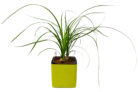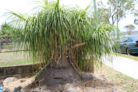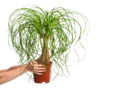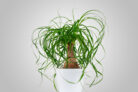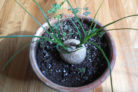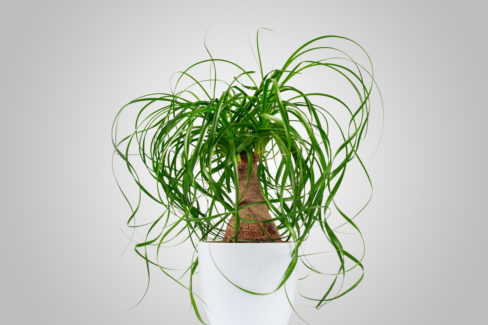
Since the Ponytail Palm can live for a very long time and eventually takes up quite a bit of room, its size is a major factor for indoor gardeners. After all, nobody wants to have to part with a gorgeous, mature specimen just because it outgrew the living room!
Size in the Wild
In its native Mexico, the Ponytail Palm grows as a succulent tree. Out in the wild, it can reach a staggering height of 30 feet, with a trunk diameter of up to 20 inches. But don’t worry—it won’t reach those massive proportions inside your house.
Size as a Houseplant
Height
Estimates for the maximum height of an indoor Ponytail Palm vary quite a bit. Usually, you’ll see 5 feet (150 cm) listed as the limit. However, if you browse around online, you’ll see plenty of happy indoor plants reaching 6 to 8 feet tall.
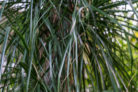
With the *Beaucarnea curvata* variety, those beautiful arching leaves can actually grow longer than the trunk itself. Because of this, you might need to plan on setting larger plants on a pedestal or stool to keep those leaf tips from turning brown by dragging on the floor.
Width
There isn’t a lot of “official” data on how wide these plants get, but you definitely shouldn’t underestimate their spread. If the leaves are constantly brushing against walls, furniture, or other obstacles, the tips will start to brown.
The width really depends on whether your plant has a single trunk or multiple stems. Here are a couple of examples to give you an idea of the scale:
- A double-stemmed plant about 8 feet tall can spread out to 6 feet wide.
- A single-stemmed plant about 3 feet tall usually has a spread of about 3 feet.
Growth Rate
Given how big they *can* get, it’s actually a relief that Ponytail Palms aren’t exactly speed demons. Even with perfect care and the ideal sunny spot, they only put on a few inches of growth per year. In fact, some plant parents get the impression their Ponytail Palm isn’t growing at all.
How big your plant ultimately gets depends on your care routine. For example, if you skip repotting, the growth will slow down significantly or stop altogether. However, “starving” the plant of space isn’t a great long-term solution if you’re low on room, as you run the risk of the plant declining due to a lack of nutrients.