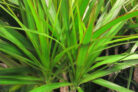
Mealybugs (Pseudococcidae) are notorious for having a major sweet tooth for succulents. Since the Ponytail Palm grows as a succulent tree, it’s unfortunately high on their list of favorite snacks.
Size and Reproduction
Mealybugs can grow up to about half an inch (12 millimeters), so they’re usually big enough to spot if you’re looking closely. Out of the roughly 1,000 different species, the Citrus Mealybug (*Planococcus citri*) is the one we see most often on houseplants. These guys are a bit trickier to find because the “big” females only reach about 1/8 to 1/5 of an inch long. Don’t let their size fool you, though—they are incredibly productive. A single female can lay between 200 and 400 eggs during her 90-day lifespan.
Signs of an Infestation
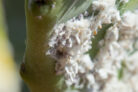
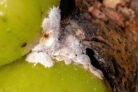
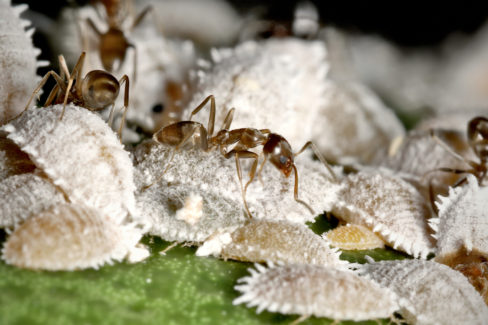
The females have pinkish bodies covered in a white, waxy secretion that forms a fringe of tiny threads around their sides. You’ll know you’re dealing with Citrus Mealybugs if you notice:
- “White spots” on the leaves and trunk
- Yellowing leaves
- Wilting foliage
- Elongated, cottony egg sacs made of white, waxy threads
There’s also a sneaky subspecies that lives on the roots of the host plant, which can actually cause the death of your Ponytail Palm. The only way to know for sure if you have root mealybugs is to pull the plant out of its pot. A dead giveaway is finding white, waxy smears on the inside of the pot.
Mobility
Citrus Mealybugs aren’t stationary; they can definitely get around. The nymphs are capable of traveling quite a distance across your Ponytail Palm. Females remain mobile until they die after laying their eggs, and the males actually have wings!
How to Fight Back
Because they move around, hide well, and reproduce like crazy, mealybugs are stubborn opponents. You’ll want to start your counter-attack the second you spot them. While winning the war can be tough, your best bet is often bringing in natural predators like:
- Green lacewings
- Parasitic wasps
- The “Mealybug Destroyer” ladybug (*Cryptolaemus montrouzieri*)
If you prefer a DIY home remedy, try a solution of about one tablespoon of paraffin oil mixed into a quart of water. A spray made with roughly 1% insecticidal soap (or a mild liquid soap) is also great because it breaks down the mealybug’s water-repellent waxy coating.
Other ways to tackle the infestation include:
- Giving the leaves a good shower or wiping them down manually
- Repotting your Ponytail Palm and thoroughly cleaning the roots
- Spraying a mixture of water, a little dish soap, and a splash of vegetable oil
Pro tip: Make sure to isolate your infected Ponytail Palm immediately so the “white plague” doesn’t spread to the rest of your plant family!