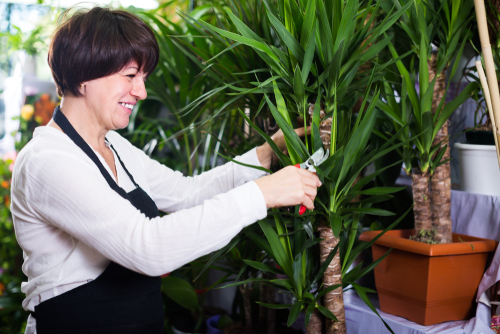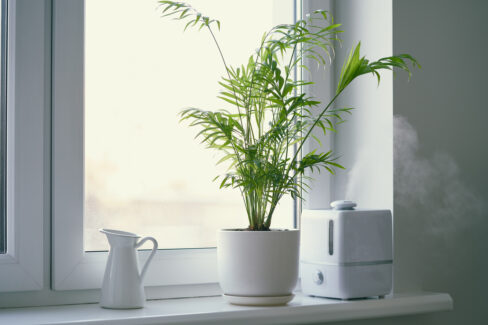
For the most part, the Kentia palm is a “set it and forget it” kind of plant when it comes to pruning. It rarely needs a haircut! You really only need to reach for the shears if leaves start dying off or if the plant is getting a bit too unruly for your space. Just a heads-up: be gentle. These palms don’t handle heavy pruning particularly well.
Dealing with Dead Leaves and Fronds
If you notice your Kentia palm has dry leaves, crispy tips, or entire brown fronds, only trim away the parts that are actually dead. If you’re just dealing with brown tips (usually caused by low humidity), make your cut a few millimeters into the brown area—avoid cutting into the healthy green tissue.
If a whole frond has completely dried out, you’ll want to remove it near the base. Cut it about 2 inches (5 cm) above the soil line. One big pro-tip: never pull or yank those dead stems out of the dirt. Even if a shoot looks dead on the surface, it might be busy growing new side shoots underground. Pulling on them can seriously damage those fragile new babies.
Pruning a Palm That’s Getting Too Big
Even though a potted Kentia usually tops out between three and six feet, it can sometimes get a little too wide for its corner. If you need to scale it back, never, ever “top” the palm (cutting the top off). If you cut the main growing point, the fronds will just turn brown and die off anyway.
Instead, if the plant is getting too bushy, just remove the outermost, overextended fronds at the base. These are usually the older ones. Just be careful not to nick the younger shoots in the center so they can keep growing strong.
Trimming the Roots
Root pruning isn’t something most indoor gardeners think about, but it’s a great trick! It actually slows down the plant’s overall growth, which can save you from having to prune the leaves as often.
The best time for a root trim is in the spring when you’re repotting your Kentia palm. Gently shake off the old soil to see what you’re working with. Here’s the golden rule: Don’t touch the taproot. That’s the main, central root, and damaging it is a big no-no.
Stick to trimming the side roots. Make sure you leave plenty of those fine, fuzzy hair roots, as those are what the palm uses to drink up water and nutrients. If you’re new to root pruning, take it slow. Just trim a little bit off this year; you can always do a bit more next spring once you see how the plant reacts!