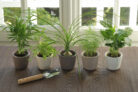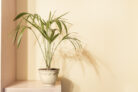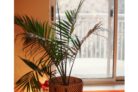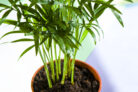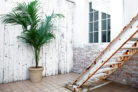
The Kentia palm originally hails from the warm, humid regions of Australia. Because of its tropical roots, this palm doesn’t just love high humidity—it also needs soil that stays moderately but consistently moist.
Avoid Soggy Soil (Wet Feet)
Even though your Kentia palm likes to stay hydrated, it absolutely hates sitting in standing water. When the soil gets waterlogged, rot-causing bacteria can take over and attack the roots. Plus, soggy soil is a magnet for pests like fungus gnats that love to lay their eggs in damp environments; once those larvae hatch, they can do some real damage to the root system. To top it off, stagnant water loses its oxygen within just a few days, and your plant’s roots need that oxygen to breathe!
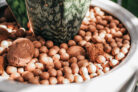
To keep things draining properly, make sure to add a drainage layer when repotting your Kentia palm. A layer of lava rock or expanded clay pebbles at the bottom of the pot works wonders.
I also recommend mixing some sand and lava rock directly into your potting soil. For larger, more established palms, you can even mix in some fine gravel. This keeps the substrate nice and airy, preventing the soil from compacting and trapping water at the bottom of the pot.
Weekly Watering Routine
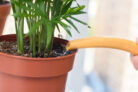
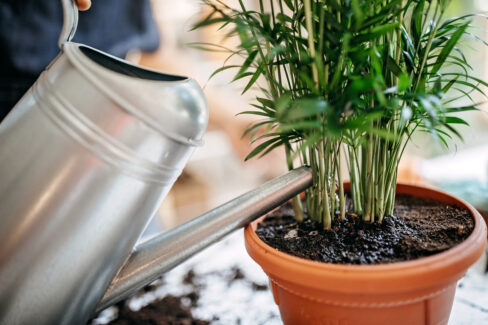
During the active growing season, you’ll want to water your palm about every five days. This is also a great time to knock out your monthly fertilizing by adding it to your watering can. When it comes to the water itself, try to use filtered water or tap water that has sat out for a bit. While Kentia palms can handle a little lime, they really prefer water that isn’t too “hard.”
If you’re worried about overwatering or underwatering, a moisture meter is a total game-changer. You just stick it in the soil, and it tells you exactly how thirsty your plant is. Some modern versions are even battery-operated and will beep or flash a light when it’s time to grab the watering can.
Winter Care Tips
Just like us, the Kentia palm likes to take it easy during the winter. Since it goes into a resting phase, you should scale back your watering schedule. Instead of every five days, aim for once every ten days, and use significantly less water than you would in the summer.
One last tip: keep an eye on that humidity year-round! This is especially important in the winter when indoor heating dries out the air. Give your palm a good misting once a week to keep it happy. In the summer, if there’s a gentle rain shower passing through, feel free to set your Kentia outside for a natural tropical spa day.