Regular pruning is one of the most important chores when it comes to caring for your orange tree. It’s not just about keeping things looking tidy; a good trim encourages dense branching and—best of all—significantly boosts your fruit harvest!
Choosing the Right Shape for Your Orange Tree
Orange trees are pretty versatile growers, so you can train them into a couple of different shapes depending on your space:
- As a bush
- As a standard (a tree with a tall, clear trunk)
Keep in mind that if you go for the “standard” look, your orange tree can get surprisingly tall, often reaching heights of 10 to 13 feet. If you prefer to keep things a bit more manageable, training it as a bush usually caps the height at around 8 feet.
The Routine Shape Up
Regular maintenance pruning is key. It keeps your tree looking sharp, ensures the branches stay nice and thick, and helps the tree produce a full canopy of fruit.
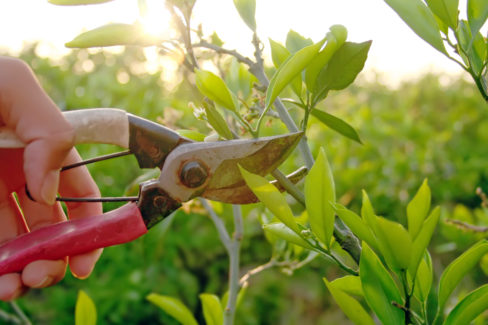
When you’re shaping your tree, go ahead and snip off any branches or shoots that are poking out past the shape you want. You’ll also want to clear out any branches growing inward, crossing over each other, or any deadwood you spot. Don’t forget to check the base of the trunk—you’ll often find weak little “sucker” shoots down there that should be removed too.
Pro tip: Always cut back to the “branch collar” (the slight swelling where the branch meets the trunk). Don’t leave any ugly stubs sticking out; cut clean and close to the main stem.
The Rejuvenation Cut: Bringing an Old Tree Back to Life
If you have an older tree that hasn’t been pruned in a while, it might start looking a bit leggy or bare. In this case, a radical “rejuvenation cut” can work wonders to stimulate new growth and revitalize the whole tree.
For this type of heavy pruning, you’re going to cut back the entire crown, taking the branches all the way back toward the trunk. Don’t be shy with those shears! Ideally, after a rejuvenation cut, there shouldn’t be a single leaf left on the tree. It looks a bit scary at first, but orange trees are vigorous growers and will start pushing out fresh new shoots in just a few weeks.
Once those first new branches reach about 12 to 15 inches, give them a quick trim as well. This encourages the tree to branch out even more, creating a lush, dense canopy.
Pruning for Propagation
Did you know you can use your trimmings to grow new orange trees? Just take cuttings that are about 6 to 8 inches long. Place them in a good potting mix, and with a little patience, they’ll root and grow into brand-new little orange trees of their own!