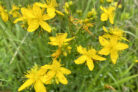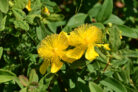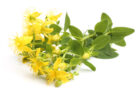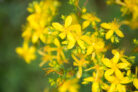
Most of us know St. John’s Wort primarily as a powerful medicinal herb. While “Common St. John’s Wort” is the variety most people recognize, you’ll actually find several different species growing in home gardens. The good news for us flower lovers? Their blooms look so similar that you can enjoy that signature golden glow regardless of the specific variety.
Bloom Time
The blooming season for St. John’s Wort kicks off right along with the start of summer. You’ll usually see the first buds popping open in late June. Depending on the weather, those last golden petals will linger on the branch tips until late August or even mid-September.
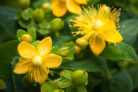
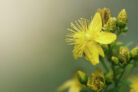
What the Flowers Look Like
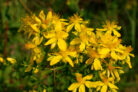
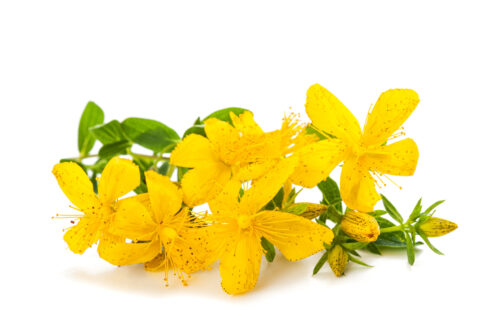
After the plant spends the spring focusing on its foliage, it sends up flowering stalks that can reach about three feet high. These stems branch out beautifully, especially at the top, where the flower buds form. Here’s what makes a St. John’s Wort flower so distinctive:
- They grow in clusters called cymes.
- The “perfect” (hermaphroditic) flowers open up wide to soak up the sun.
- They feature five-fold radial symmetry.
- They have a double floral envelope (sepals and petals).
- The five green sepals are tiny, about 1/5 of an inch.
- The five bright golden-yellow petals grow up to 1/2 inch long.
- The center is packed with up to 100 fuzzy-looking stamens.
While other species of St. John’s Wort might have slight variations, they all share this basic “sunny” look.
Quick Note:
The petals contain a compound called hypericin. If you rub the flowers between your fingers, they’ll leave a reddish stain on your skin—which is why it’s sometimes nicknamed “St. John’s Blood.”
Using the Flowers
When it comes to herbal remedies, the flowers are the real stars of the show, though the leaves can also be used in teas and salads. The active ingredients are famous for their mood-lifting properties, which is why St. John’s Wort is often called “nature’s antidepressant.” When used correctly, it’s a great natural option with very few side effects.
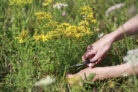
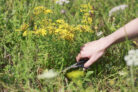
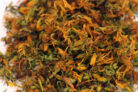
If you’re planning on harvesting your own, wait until mid-summer when the flowers are in full bloom. Most herbalists cut the entire stem, bundle them together, and hang them upside down to air dry. If you don’t have space to grow your own or a clean spot to forage, you can easily find high-quality products at most health food stores.
Pro Tip:
If you’re foraging for health purposes, make sure you can tell the difference between St. John’s Wort and Tansy Ragwort. Tansy is toxic, and it’s easy to mix them up if you aren’t looking closely!