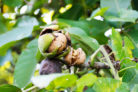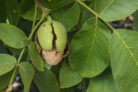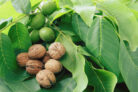
The walnut tree is a backyard favorite for more than just its tough-as-nails nature and those delicious nuts. Its unique blooms are actually a major highlight—and they’re absolutely essential if you’re hoping for a harvest later in the season.
Walnut Trees are “Monoecious”
In the gardening world, we call the walnut tree “monoecious.” That’s just a fancy way of saying that a single tree hosts two different types of flowers:
- Female flowers
- And male flowers.
The Male Flowers
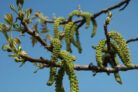
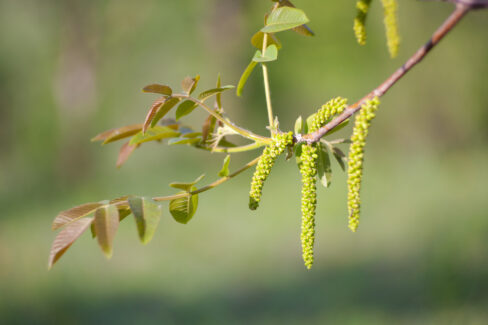
The male flowers usually make their debut a few weeks before the females. They sprout from the leaf axils on the foliage that grew the previous year. You’ll recognize them as “catkins”—those long, drooping clusters that reach about 5 to 6 inches in length. While their green and yellow colors are pretty subtle, these thick, hanging strands give the tree a really distinct look. You can usually spot them opening up around April or May.
If you look closely, each individual male flower is made up of:
- Three to six perianth segments,
- Two bracteoles,
- And one bract.
These outer layers protect the star of the show: about 40 stamens tucked inside.
The Female Flowers
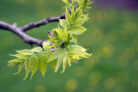
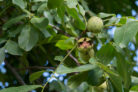
The female flowers are a bit more fashionably late, appearing three to four weeks after the males. You’ll find them sitting in pairs or small clusters at the very tips of this year’s new growth. They’re much more low-key than the male catkins, measuring only about half an inch long. They consist of a four-part perianth along with bracts that form a fuzzy, hairy little shell. Inside, you’ll find the ovary, two stigma lobes, and a short, two-part style.
How Pollination Works
For the most part, walnut trees rely on the wind to do the heavy lifting when it comes to pollination. However, local insects often stop by and help move things along, too.
From Flower to Fruit
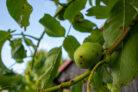
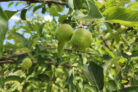
Once pollination is successful, those flowers begin their transformation into the fruit we all know and love: the walnut.
When Do They Bloom?
The general blooming season for a walnut tree is typically in May. Just keep in mind that the male and female flowers have that staggered schedule I mentioned earlier.
If you’ve just planted a sapling, you’ll need some patience! A walnut tree usually won’t bloom for the first time until it’s about 15 to 20 years old. That means you’ll have a bit of a wait before you can enjoy your first harvest.