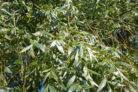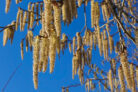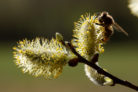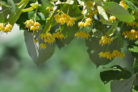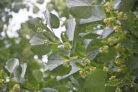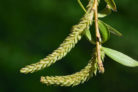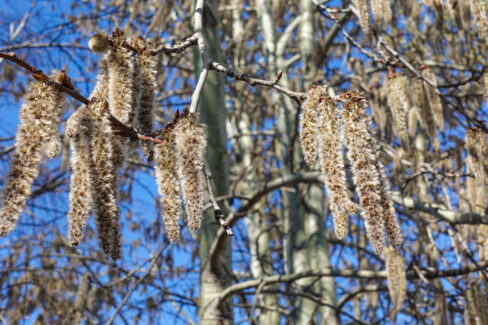
Beyond its shimmering leaves and nectar-packed blossoms, the White Willow has another trick up its sleeve. Throughout the year, you’ll notice distinct capsule-like fruits forming on its branches. If you’ve ever wondered what’s going on with those little pods, here is everything you need to know about the fruit of the White Willow.
Shape and Characteristics
The White Willow (scientifically known as Salix alba) is a fast grower, and that energy isn’t just limited to its branches, leaves, and flowers. Its fruit develops just as quickly! The tree produces small capsules that start to burst open as early as the beginning of summer, releasing the seeds tucked inside.
These seeds are equipped with tiny, silky white hairs that act like little parachutes. This “fluff” allows the seeds to catch a breeze and travel surprisingly long distances. It’s a clever survival tactic—by using the wind, the tree can spread its offspring far and wide even if the local pollinators are busy elsewhere.
Seed Dispersal Timeline:
- Capsules ripen: June
- Capsules burst and seeds spread: June to July
- Method of travel: Wind-dispersed
Germination and Seed Potential
One of the coolest things about White Willow seeds is their high germination rate. These seeds are tough and can sprout even in less-than-ideal conditions. This means you can actually try your hand at propagating the tree yourself if you’ve got a bit of patience! Watching a tiny seed transform into a towering, majestic giant in your backyard is a pretty rewarding experience.
In the wild, the tree is an expert at self-seeding. However, once a willow starts to take off in your garden, it’ll eventually need a little TLC from you. To keep it healthy and looking its best, you’ll want to stay on top of pruning. Don’t worry, though—pruning a White Willow isn’t rocket science and doesn’t take much time. Even if you’re a beginner, a little bit of research is all you need to keep your tree in great shape.