Black locust seeds are famous for staying viable for a really long time, which is why these trees are so good at spreading on their own in the wild. But if you’re looking to add one to your landscape, you don’t have to leave it up to chance! You can easily propagate them yourself using seeds or root cuttings.
Natural Propagation via Seeds
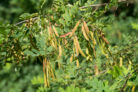
In the wild, the Black Locust takes care of business all by itself. The seeds develop inside seed pods and get scattered by the wind. Of course, having random trees pop up wherever the wind blows isn’t always ideal for a gardener, which is why many of us prefer a more hands-on approach.
Ways to Propagate Your Black Locust
If you want to grow your own, you generally have two main paths to choose from:
- Growing from seeds
- Using root cuttings or suckers.
Growing from Seeds
You can definitely buy seeds at a garden center, but if you already have a tree nearby, you can just harvest the seeds directly from the pods. Since you’ll want to plant them in the spring, make sure to store any seeds you collect in the fall in a cool, dry spot over the winter.
- To give your seeds a head start, let them soak in lukewarm water for a few days to soften the outer shell and boost germination.
- Plant them about 1/4 inch (5 mm) deep in a pot filled with a good seed-starting mix.
- Find a warm, sunny spot for your pot and keep the soil consistently moist (but not soggy!).
- You should see sprouts popping up within a few weeks.
- Once your little seedlings are sturdy enough, you can move them to their own pots or find them a permanent home in your garden.
Propagating with Cuttings and Suckers
Black Locusts are known for sending out “suckers” (new shoots from the roots), which makes root cuttings a great option. For this method, you’ll want a root cutting that’s about four inches long and about the thickness of a pencil.
- Place your cutting into a pot with quality potting soil.
- Just like with seeds, keep the pot in a warm, bright area and make sure the soil stays damp.
- In a few weeks, the cuttings will start developing their own roots and fresh green shoots.
- As soon as these young plants look strong enough, they’re ready to be moved to individual pots or planted directly into your yard.