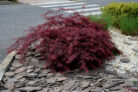
There’s something truly magical about bright blue flowers. They seem to mirror the summer sky and bring a cool, refreshing pop of color to any garden bed. Today, I’m sharing seven of the most popular blue summer blooms, plus a little “insider tip” for a plant that adds amazing texture to your landscape.
[[plants]]
++Bluebeard (Caryopteris clandonensis)
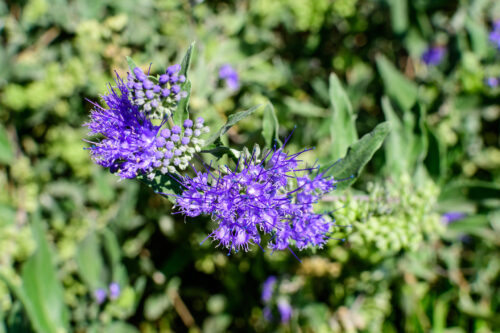
This beauty is a real head-turner! Part of the verbena family, Bluebeard produces clusters of radiant blue flowers from July all the way through September. It’s not just a treat for our eyes, though—bees and butterflies absolutely love its nectar-rich blooms. Even the silvery-green, serrated leaves have a lovely, spicy scent when brushed against. It thrives in warm spots and handles drought like a champ, making it a super versatile choice for your garden.
++Speedwell (Veronica)
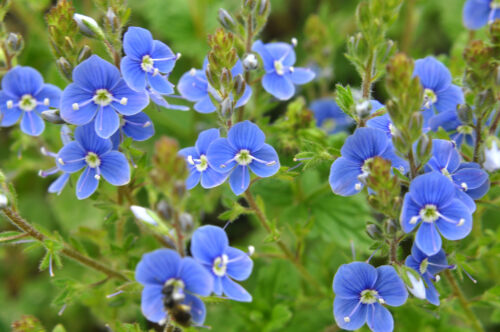
Long-leaf Speedwell (*Veronica longifolium*) is a classic border perennial that can reach anywhere from 2 to 4 feet tall. Its striking blue flower spikes are like magnets for pollinators during the summer months. If you’re looking for something shorter, the low-growing varieties make excellent groundcovers and look stunning paired with red or white roses. Speedwell loves full sun but is otherwise incredibly low-maintenance and easy to grow.
++Cranesbill Geranium (Geranium)
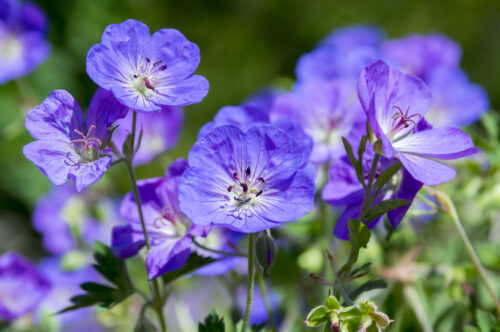
Hardy cranesbill geraniums have been garden staples for decades, and for good reason! They are fuss-free, vigorous growers, and many varieties stay green even through the winter. They get their name from their unique, beak-shaped seed pods that form after the colorful, cup-shaped flowers fade. Their lobed foliage is also super decorative. These are perfect for naturalistic gardens where they can spread out as a groundcover and mingle happily with other perennials.
++Monkshood (Aconitum napellus)
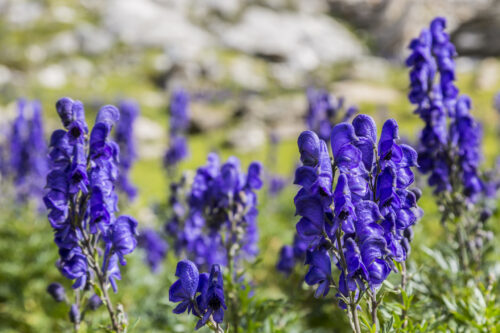
Monkshood is a quintessential cottage garden plant that can grow anywhere from 20 inches to a towering 6 feet. The deep blue flower spikes are shaped like the hood of a medieval monk (or a knight’s helmet!), appearing in June and lasting well into the fall. Just a quick heads-up: all parts of the Monkshood plant are toxic. Because of this, you’ll want to plant it in a spot where curious kids or pets won’t come into contact with it.
++Bellflower (Campanula)
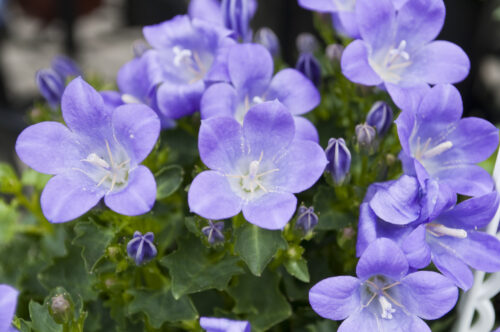
With so many different varieties out there, you can find a blue Bellflower for almost any spot in your yard. Compact types work beautifully as groundcovers, while taller species like the Milky Bellflower make a great backdrop for a perennial bed. Their cheerful bell- or star-shaped flowers bring a whimsical vibe to the garden. They are also some of the most hardworking bloomers, pushing out new buds from June through September.
++Delphinium (Larkspur)
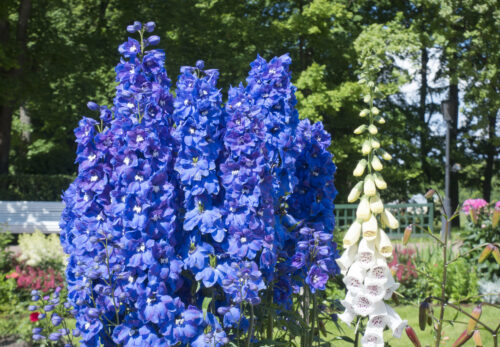
Known for their intense, electric blue hues, Delphiniums are the royalty of the summer garden. They can reach heights of up to 6 feet, standing tall above almost everything else in the bed. The name comes from the “spur” on the back of the flower. Since these are a vital food source for insects, I always recommend planting the single-flowered varieties rather than the “doubles” so the bees can easily reach the nectar!
++Catmint (Nepeta)
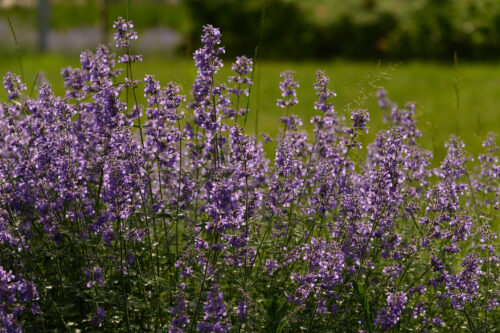
Catmint is fantastic for softening the edges of a garden path and is a must-have for any pollinator-friendly space. Throughout the summer, it produces airy, blue flower spikes that give off a wonderful, minty fragrance. Depending on the variety, it can grow between 1 and 3 feet tall with a bushy, relaxed habit. To see it really thrive and reach its full potential, give your Catmint a spot in the full sun.
%%Blue Globe Thistle (Echinops bannaticus ‘Taplow Blue’)
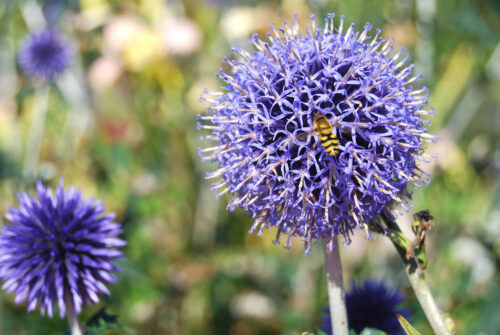
If you want to add some architectural interest to your garden, the Globe Thistle is my top pick! Between July and September, this plant produces perfectly spherical, steel-blue flower heads that can grow up to 2 inches across. Despite its unique look, it’s actually a very hardy, adaptable plant that plays well with others. Plus, the “globes” last for weeks in a vase and look amazing when dried for indoor arrangements!