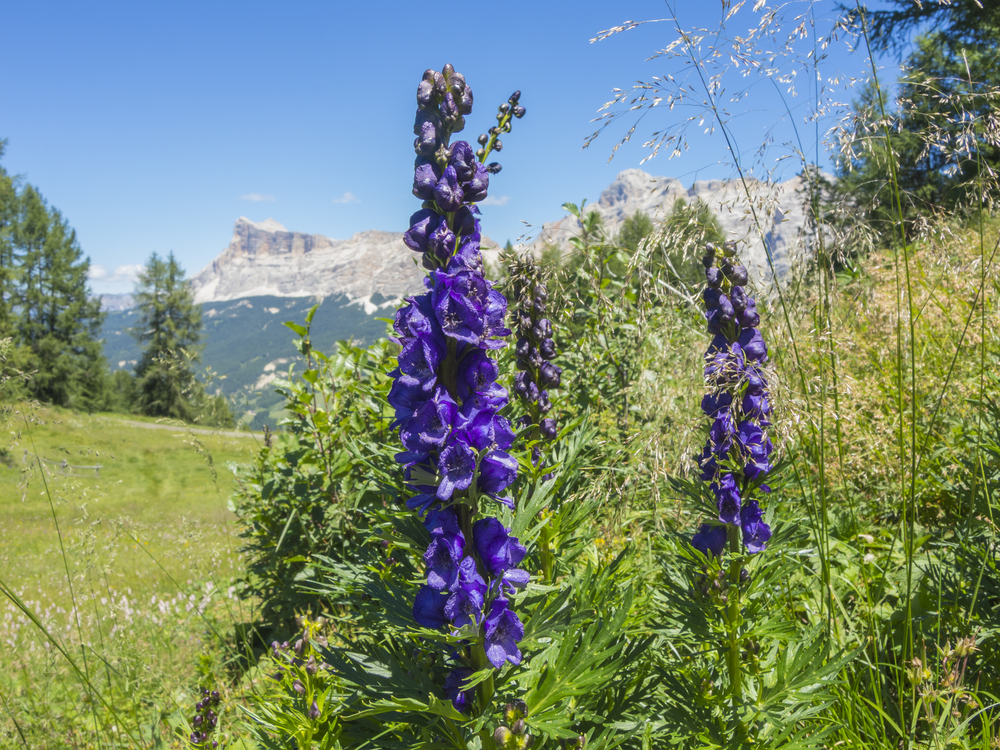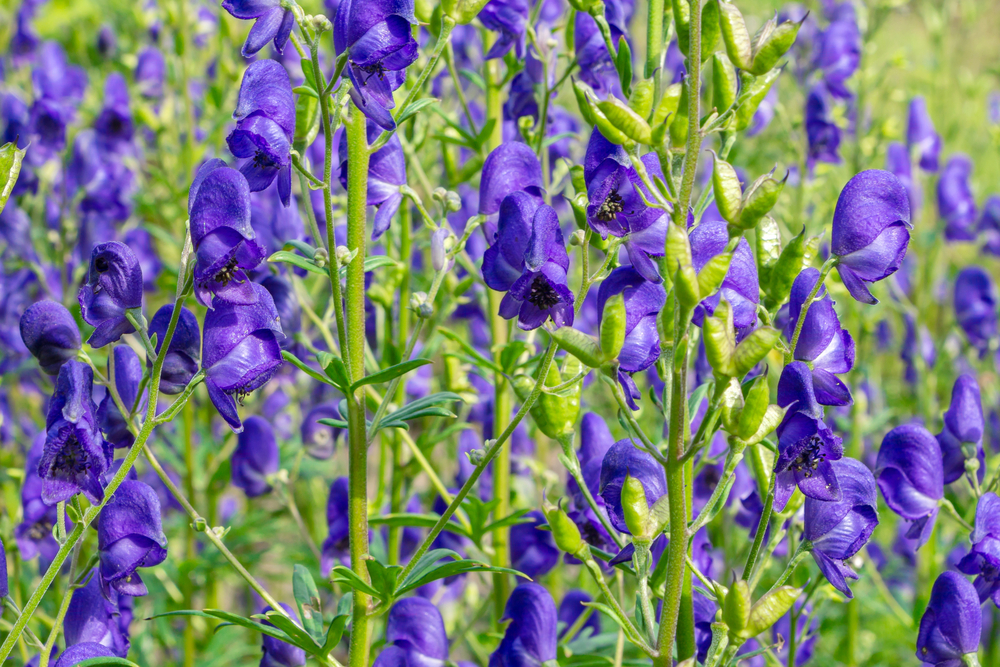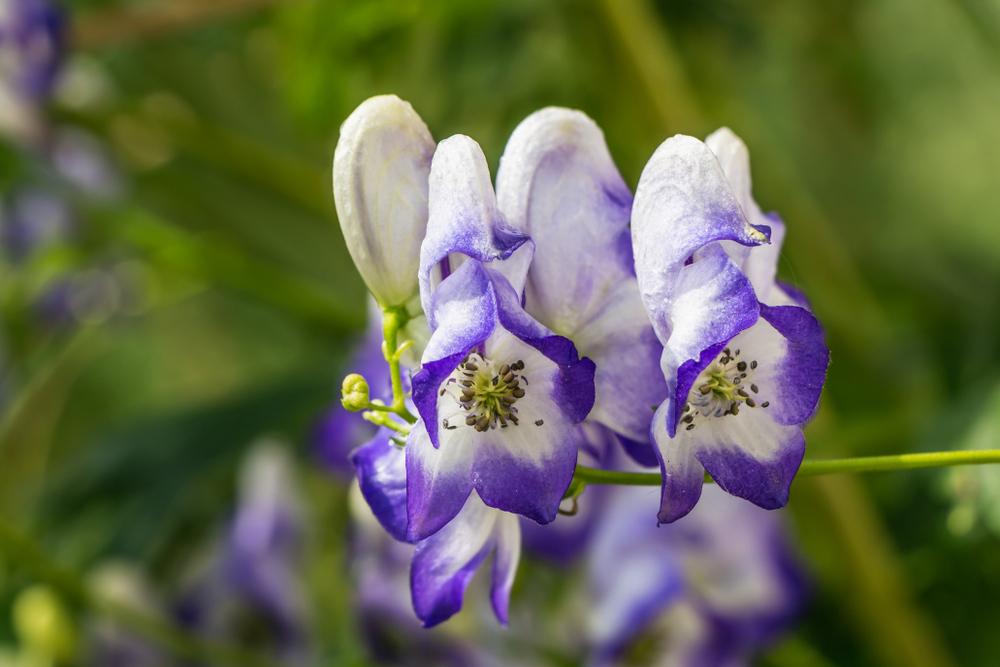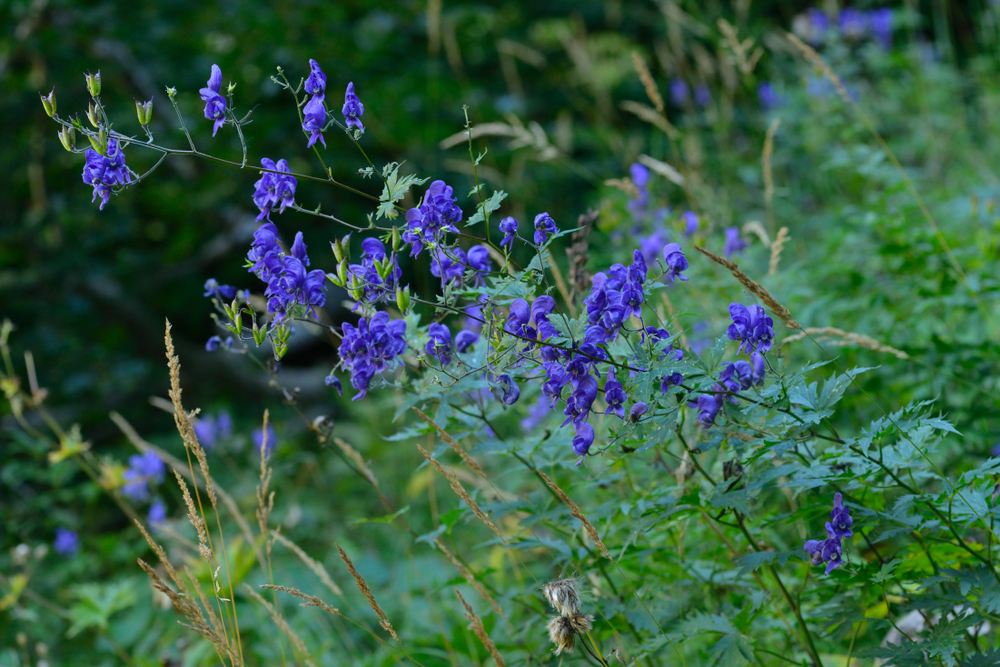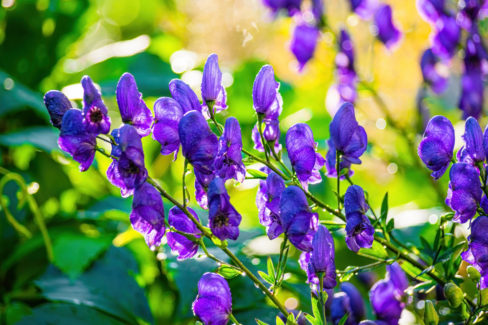
Monkshood, with its stunning clusters of deep blue flowers, is a member of the buttercup family—but don’t let that friendly relation fool you. Every single part of this plant is highly toxic. This isn’t new information, either; people have known about its deadly nature since ancient times. In fact, Greek mythology tells us that when Hercules dragged the three-headed hound Cerberus out of the underworld, the dog’s venomous drool hit the earth, and Monkshood sprouted from those very spots.
What Does Monkshood Look Like?
This herbaceous perennial usually grows to about 3 feet tall. In the wild, you’ll mostly find it in the mountains of Central and Western Europe at elevations up to 8,000 feet. Because those blooms are so eye-catching, it’s a popular choice for home gardens. It features an upright stem with dark green, hand-shaped leaves arranged alternately. From summer through fall, Monkshood blooms with brilliant blue flowers that look remarkably like tiny medieval helmets (which is how it got its name!).
The Toxicity of Monkshood
While this flower is a total showstopper, it’s also incredibly dangerous. Every part of the plant—especially the roots and seeds—contains various alkaloids, including aconitine. This is a potent neurotoxin that spreads through the body lightning-fast. Ingesting just a few grams can be fatal. Even just brushing against it with bare skin can cause a nasty rash, though skin contact alone usually isn’t deadly.
Because Monkshood poses such a serious risk to people and pets, I’d recommend skipping it if you have kids or furry friends running around the yard. If you absolutely love the look and want it in your garden, make sure you do your homework and handle it with extreme care.
Symptoms of Poisoning
If someone ingests or handles Monkshood improperly, symptoms show up almost immediately. In some cases, it can be too late for the victim within just 30 minutes. Here’s what to look out for:
- Numbness or tingling
- Vomiting
- Diarrhea
- Vision problems
- Respiratory paralysis
- Irregular heartbeat
- Skin rashes
Effects on Humans
Blue Monkshood is actually the most poisonous plant in Europe, so you have to treat it with the utmost respect. Even tiny amounts of the toxin can be fatal or cause permanent damage. If you touch it, you’ll likely get a rash. If ingested, it starts with a tingling sensation in the mouth, arms, and legs. This is followed by heavy sweating, vomiting, and diarrhea. After about 20 minutes, body temperature drops sharply; ten minutes later, blood pressure plummets and the heart rhythm becomes erratic. Within 45 minutes, heart failure can occur.
If you even *suspect* someone has been poisoned by Monkshood, call emergency services immediately!
Effects on Animals
The toxin is just as dangerous for our animal friends if they happen to munch on it:
- Livestock like horses, cattle, sheep, and pigs
- Pets like birds, dogs, cats, rabbits, hamsters, and guinea pigs
Signs of poisoning in animals include heavy drooling and dilated pupils. The animal may become restless or aggressive, and their body temperature will rise. This leads to tremors, facial paralysis, and heart palpitations. Ultimately, death occurs due to respiratory failure.
If you think your pet has gotten into some Monkshood, get them to a vet right away!