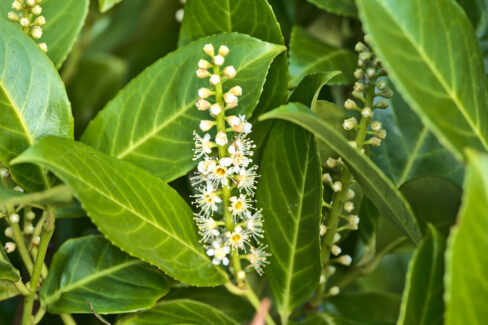
Cherry laurels are pretty hardy, but they aren’t invincible. While seeing a few ants crawling around is usually no big deal, there’s one pest that should definitely put you on high alert: the black vine weevil. If these guys move in, you’ve got a real problem on your hands. Here’s how to spot them and, more importantly, how to get rid of them for good.
Look for those tell-tale “cookie-cutter” bite marks
You probably won’t see the actual beetles hanging out on your plants during the day—they’re masters of hide-and-seek. Instead, you’ll see their handiwork. These weevils chew semi-circular notches into the edges of the leaves, almost like someone used a hole puncher on your hedge. If you start seeing these half-moon shapes, it’s time for a stakeout. Grab a flashlight or use your phone light and head out to the garden after dark. That’s when these nocturnal nibblers come out to play, and you can catch them red-handed.
You can hand-pick the black vine weevils off the leaves to slow them down, but honestly? That’s just a band-aid fix. The real villains aren’t the adults you see on the leaves; it’s the larvae hiding underground. These grubs feast on your plant’s root system, and if they eat enough, your cherry laurel won’t survive. You’ve got to stop them at the source.
Use nematodes for a natural, effective fix
The best way to handle a weevil infestation is to fight nature with nature. Head to your local garden center or hop online to order some nematodes. These are tiny, beneficial organisms that are the natural arch-nemesis of the vine weevil. They usually come in a powder form that you mix with water and apply to the soil. Once they’re in the ground, they get straight to work hunting down those root-munching larvae.
The nematodes eat the larvae, and once the food source is gone, the nematodes simply die off. The best part? You aren’t spraying harsh chemicals or poisons in your backyard. It’s a totally safe, eco-friendly, and incredibly effective way to protect your garden. With these little helpers on your side, your cherry laurel will be back to its healthy, vibrant self in no time.