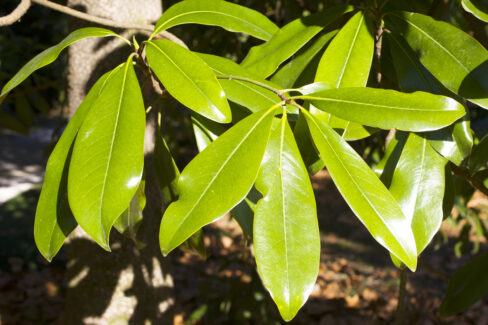
Cherry laurels are generally super easy-going and pretty tough customers in the garden. Because they’re so hardy, they don’t get sick very often. However, there are a few common issues you should keep on your radar to keep them looking their best.
Shot Hole Disease
First up is “Shot Hole Disease,” which is caused by a fungus called *Stigmina carpophila*. You’ll usually see this pop up if we’ve had a particularly wet spring. Around May or June, you’ll start noticing it on the fresh, young leaves. Small spots turn yellow and eventually drop out completely, leaving perfectly round holes—it literally looks like the plant was hit with a shotgun! While it won’t usually kill the whole shrub, it spreads quickly and makes your laurel look pretty ragged. The best move is to jump on it early: as soon as you see those holes, prune back any affected branches to stop the spread.
Powdery Mildew
Cherry laurels can also fall victim to powdery mildew. This one looks like a dusty, whitish coating on the undersides of the leaves. Your plants are actually at a higher risk if you prune them in the heat of the summer, because that tender new growth is like a magnet for the fungus. If you spot that white fuzz, your first step is to clip off the infected parts. Afterward, treat the rest of the plant with a sulfur-based fungicide to keep it from coming back.
Pests
Beyond fungi, there are a couple of creepy-crawlies that love to snack on cherry laurels. The two main culprits are:
- Vine Weevils
- Aphids
You’ll know you have vine weevils if you see distinctive “notches” or semi-circle bites taken out of the edges of the leaves. The best eco-friendly way to deal with these guys is by using beneficial nematodes (specifically HM-nematodes). As for aphids, if it’s just a minor case, a strong blast from the garden hose is usually enough to knock them off. If they’ve really moved in, try spraying the leaves with a mixture of warm water and a little bit of insecticidal soap (or plain liquid castile soap).