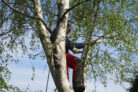
Birch trees are incredibly decorative, and if you didn’t know, they actually offer some pretty cool health benefits and edible parts! However, there are plenty of valid reasons why a homeowner might decide it’s time for one to go. If you’re at that point, you’ll want to make sure the job is planned and executed perfectly.
Check Your Local Regulations First
In many areas, you can’t just go out and chop down a tree on a whim—even if it’s on your own private property. There are often specific local ordinances regarding which trees require a permit before they can be removed. Generally speaking, the older the tree and the wider the trunk, the more likely it is to be protected. Since these laws vary wildly from town to town and state to state, your first step should always be checking in with your local municipal office or building department.
Quick heads-up:
Failing to get the right permits before taking down a tree isn’t just a minor oversight—it’s often considered a code violation that can result in some pretty hefty fines.
Timing is Everything: Stick to the Off-Season
To protect nesting birds and local wildlife, major pruning and tree removals are typically restricted to the colder months—usually from October through the end of February. Of course, there’s an exception for emergencies. If a tree is leaning dangerously due to disease or has been damaged in a storm, it needs to come down ASAP to keep people and property safe. If you aren’t sure if your birch is a hazard, you can always reach out to a local arborist or your city’s parks department for an expert opinion.
Taking Down a Birch is Tricky Business
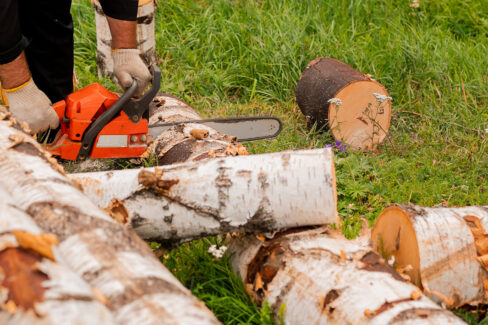
The taller a birch tree gets, the more unpredictable it becomes during a felling. You really have to weigh the risks before deciding to DIY this one or hire a pro. It doesn’t do much good to remove a shallow-rooted tree to save your sidewalk if the trunk ends up crashing through your roof! If you do decide to tackle the job yourself, make sure any bystanders (and pets!) are kept at a very safe distance.
Pro Tip:
You can save yourself a lot of headache down the road by choosing the right spot when planting in the first place. Give birches plenty of room away from walls, paths, and other trees, as those roots love to spread out wide and shallow.
An Alternative: Girdling (Ring Barking)
If you want to remove a birch without a full-scale felling operation, there’s a forestry method called “girdling” (or ring barking). It’s a way to slowly kill the tree standing, which can save you some money and doesn’t require heavy machinery. Just remember: you still need to check if you need a permit for this!
- Use a drawknife to peel away sections of the bark.
- Create a strip about 2 to 4 inches wide at roughly chest height (about 3 feet up).
- This strip must go all the way around the trunk like a ring.
- Use a wire brush to scrape away the entire cambium layer (the green/living part under the bark).
- Be careful not to cut too deep into the actual wood underneath.