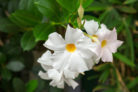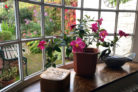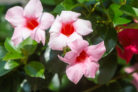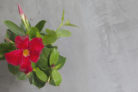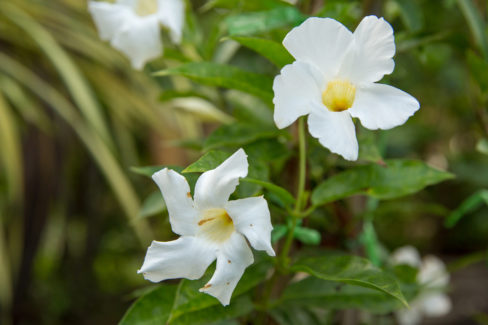
Dipladenia (Mandevilla) is often sold as an annual, but here’s a little secret: it’s actually a perennial! If you want to enjoy those gorgeous blooms again next season, you’ve got to keep a close eye on the thermometer. These tropical beauties are total sun-worshippers and will freeze faster than you can say “garden party.”
Hardiness
Let’s be real: Dipladenias are nowhere near hardy. Once the temperature hits about 46°F (+8°C), they decide it’s too chilly and stop growing altogether. If the mercury hits the freezing mark (32°F), it’s game over—the plant will freeze. This means one unexpected overnight frost can be a death sentence for your Mandevilla.
Chilean Jasmine (Mandevilla laxa)
You might hear that Chilean Jasmine is a bit tougher. In some very mild climates, like southern Switzerland, people actually grow it in the ground over winter with heavy protection. But for most of us, especially if yours is in a pot, keeping it on the balcony or patio all winter is a no-go. It’s just too cold.
The one “perk” of Chilean Jasmine is that it can handle temperatures right around freezing a bit better than its cousins. This makes it slightly less likely to die from a surprise light frost, but it still isn’t built for wintering outdoors in the US.
Frost Damage
If your plant was tucked away in a sheltered spot—like against a warm brick wall—it might have survived a cold snap. Even if it looks a little sad, it’s worth trying a rescue mission if the plant:
- Looks limp or wilted
- Has curled leaves or is dropping foliage
However, if the stems feel mushy or slimy, I hate to be the bearer of bad news, but it’s likely a goner. In that case, you’ll have to say your goodbyes. Your only hope then is to see if any stem tips are still firm; if so, you can try taking cuttings. With a little luck and patience, you might be able to start fresh plants.
Saving the Plant
Whether you’re emotionally attached to your Mandevilla or just don’t want to shell out the cash for a new one next spring, give this rescue plan a shot—even if the plant looks pretty pathetic right now:
- Bring the plant indoors immediately.
- Find a cool spot around 45°F (7°C).
- Water moderately with lukewarm water.
- After a few days, move it to its permanent winter quarters.
- Start your standard winter care routine.
Pruning
Hold off on pruning until spring. Once you see new growth starting, you’ll be able to tell exactly which parts are dead and which are still alive.
Repotting
If the plant continues to decline, it’s time to check the roots. If you find any mushy, rotted roots, trim them off and repot your Mandevilla into fresh, clean soil.