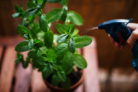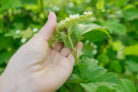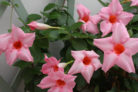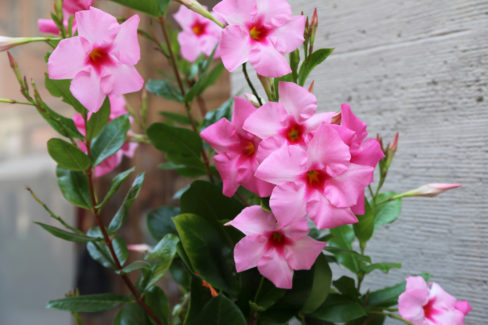
For many of us home gardeners, aphids and other pests are a total headache. Luckily, the Dipladenia (also known as Mandevilla) is usually pretty tough and doesn’t get hit by bugs too often. However, every now and then, these little uninvited guests decide to move in and can really do some damage if you aren’t looking.
Aphids and Pests
It’s often a mystery where these pests even come from—it feels like they just show up overnight! That’s why I always recommend giving your Mandevilla a quick once-over for pests regularly. The sooner you catch them, the easier it is to save your plant. Besides using natural predators, home remedies, or insecticides (if things get really bad), here are two immediate steps you should take if you spot an infestation:
- Move the plant to an isolated location so the bugs don’t spread to your other green friends.
- Give the plant a generous pruning to remove the worst-hit areas.
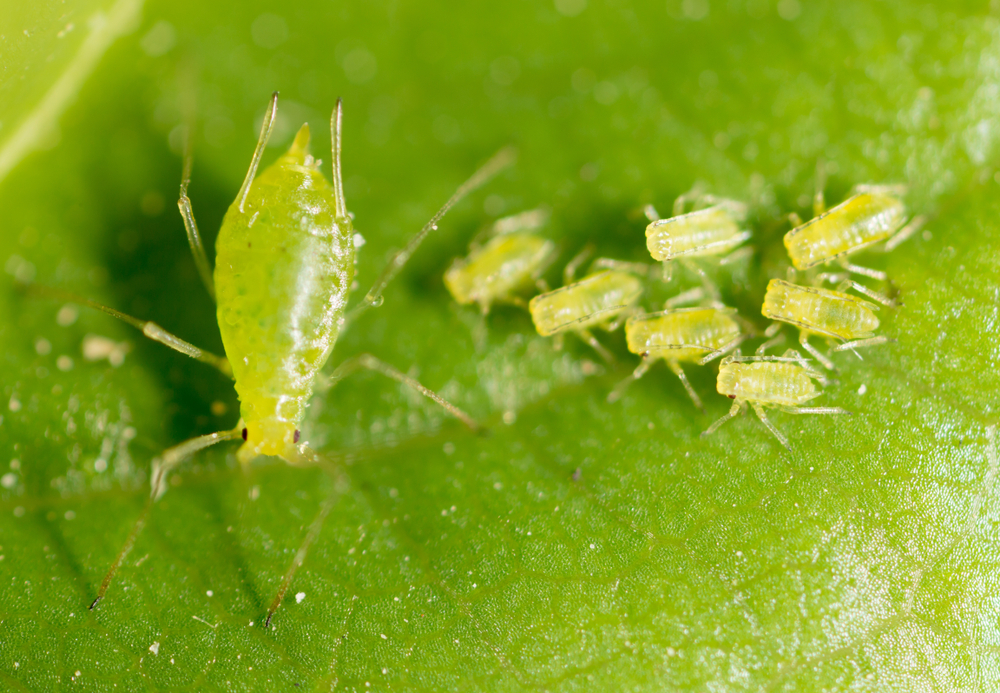
Foxglove Aphid (Aulacorthum solani)
- Where they hide: Both indoors and outdoors.
- What they look like: Yellowish, pale green, or bright green with dark green or reddish-brown spots. They grow up to about 1/8 inch (3 mm) long.
- How they spread: They multiply like crazy! One adult can produce about 70 offspring when temperatures are between 50 and 70°F.
- The damage: You’ll see them on stems and especially on tender new growth. Look for yellow spots, stunted growth, or deformed leaves. They also secrete sticky “honeydew,” which can lead to sooty mold (it’s not harmful to the plant itself, but it leaves an ugly grey or black film).
What to do:
- Natural predators: Bring in the cavalry! Braconid wasps, lacewing larvae, predatory midges, and ladybugs love to snack on these.
- Home remedies: If the infestation is still small, try a mild insecticidal soap solution or a stinging nettle tea.
- Insecticides: Use these as a last resort for heavy infestations.
Whiteflies
“Whitefly” is actually a catch-all term for several species in the Aleyrodoidea family.
- Where they hide: Mostly on indoor plants.
- What they look like: Tiny white insects (thanks to a waxy coating) about 1/16 inch (1.5 mm) long.
- How they spread: Each female lays four to seven eggs every single day.
- The damage: You’ll find tons of tiny eggs on the undersides of leaves and that signature sticky honeydew.
What to do:
- Natural predators: Parasitic wasps (like Encarsia formosa) are great because they target the larvae.
- Sticky traps: Use yellow sticky cards to catch the flying adults.
Citrus Mealybug (Planococcus citri)
- Where they hide: Mostly indoors.
- What they look like: These look like tiny bits of white fluff or powder and grow up to 1/5 inch (5 mm) long.
- How they spread: They reproduce incredibly fast, laying 200 to 400 yellowish-orange eggs at a time.
- The damage: Check the leaf axils (where the leaf meets the stem) and along the veins on the underside of the leaves.
- Symptoms: Leaves will turn yellow and eventually start to wilt.
What to do:
- Natural predators: Parasitic wasps.
- Insecticides: These are often necessary for mealybugs because they are so hardy.
- Pro tip: If your Mandevilla has already started wilting significantly from mealybugs, it might be too late to save it. Catching them early is key!