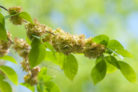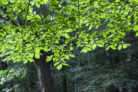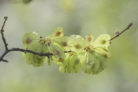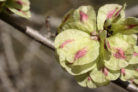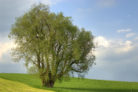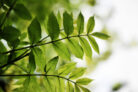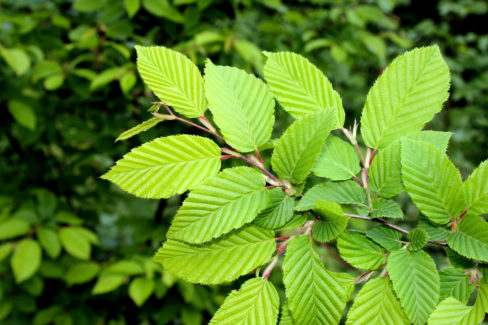
If you’re trying to identify different elm species, the leaves are your best friend. Each type of elm has its own unique “fingerprint” in the form of its foliage. But these leaves are more than just a pretty face—they’re also the first place you’ll notice if your tree is feeling under the weather.
The Basic Look of an Elm Leaf
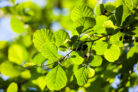
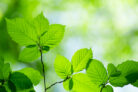
While specific shapes vary depending on the elm species, most elm leaves share a few “family traits” that make them easy to spot:
- They are generally egg-shaped or oval.
- They grow in an alternating pattern along the branch and are usually asymmetrical at the base.
- The edges (margins) are serrated, looking a bit like a saw blade.
- They feature pinnate venation (veins that branch out from a central rib).
Telling Elm Species Apart by Their Leaves
If you look closely, you can actually tell which elm you’re standing under just by checking out the foliage. Here’s a quick breakdown of the most common ones:
Siberian Elm Leaves
The leaves of the Siberian Elm (sometimes called the Dwarf Elm) are egg-shaped and alternate. Unlike many of its cousins, the base of the leaf is fairly symmetrical, and the edges are sharply toothed.
American Elm Leaves
The classic American Elm also has egg-shaped, alternating leaves. However, these are famously asymmetrical at the base and feature “double-serrated” edges—meaning the big teeth on the leaf edge have tiny teeth on them!
Dutch Elm Leaves
Dutch Elm leaves are oval but taper into a very slender, pointed tip. They are also asymmetrical and double-serrated. One of the biggest giveaways for this variety is the notably short leaf stem (petiole).
European Elms and Their Stems
In Europe, gardeners often use the leaf stems to tell species apart. The European White Elm has long stems, the Wych Elm has very short stems, and the Field Elm has leaves that sit almost flush against the branch with virtually no stem at all.
Elms are Deciduous
All elm species are deciduous, meaning they drop their leaves for a winter nap. Elms are actually known for being “early birds” when it comes to shedding; they tend to drop their leaves earlier in the fall than many other hardwoods, so don’t be alarmed if your elm goes bare while the neighbors’ trees are still green!
Don’t Confuse Them with Hazel!
To the untrained eye, elm leaves look a whole lot like Hazel leaves. It’s a common mix-up! However, once the trees start producing fruit or seeds, the mystery is solved pretty quickly—hazelnuts and elm samaras look nothing alike.
Using Elm Leaves
Did you know elm leaves are actually edible? Freshly picked, well-washed young leaves make a unique addition to salads or side dishes. Beyond the kitchen, they’ve also been used for centuries in traditional herbal medicine.
Spotting Pests and Disease
Your elm’s leaves act like a health monitor. Most diseases and pest infestations show up there first. Keep an eye out for yellow or brown spots, wilting, or leaves dropping way too early—these are usually red flags for fungus or bugs. Even if you’re just overwatering or underwatering, the leaves will be the first to tell you by changing color.