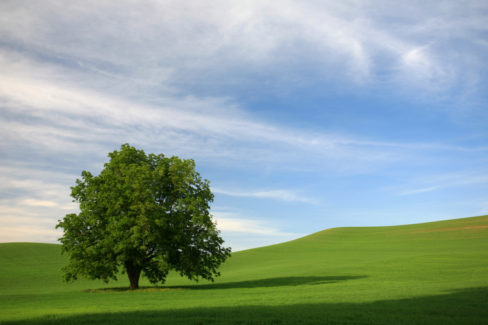
Both the Field Elm and the Wych Elm (also known as the Scotch Elm) are native staples in European landscapes. While there are about 30 different species of elms worldwide that share a lot of similarities, telling these two apart is actually pretty easy once you know what to look for.
Key Differences in Growth and Shape
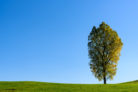
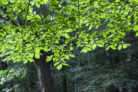
If you’re standing in front of a tree and you’re positive it’s an elm, but you aren’t sure which one, the first thing you should check is the overall “vibe” of the tree—specifically its height and the shape of its canopy.
The Field Elm
The Field Elm has a few distinct characteristics:
- It usually tops out at a maximum height of about 100 feet.
- Its canopy tends to be nice and round, almost like a big green ball.
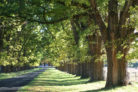
The Wych Elm
On the other hand, the Wych Elm stands out because:
- It’s a bit of a giant, reaching heights of up to 130 feet.
- Its canopy is incredibly dense and often grows much lower to the ground than the Field Elm’s.
Other Important Ways to Tell Them Apart
Of course, you can’t always judge a tree by its height—especially if it’s standing all by itself without any neighbors for comparison. To be 100% sure, you’ve got to get up close and personal with the leaves and flowers.
The Leaves
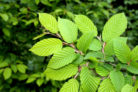
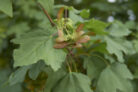
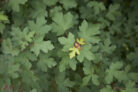
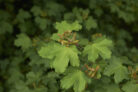
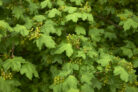
While both trees have shiny green leaves, the devil is in the details. Field Elm leaves typically have a single tip and sit on a relatively long stem (petiole). If you run your finger over the top of the leaf, it’ll feel smooth and look glossy.
Wych Elm leaves are a different story. Instead of one tip, they often have three distinct points at the end. The stems are much shorter, and the texture is the exact opposite of the Field Elm: the top of the leaf feels rough and hairy, while the underside is surprisingly soft and smooth.
The Flowers and Seeds
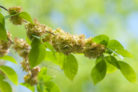
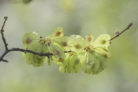
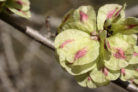
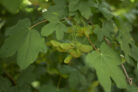
If you happen to be looking at the tree when it’s seeding, take a look at the “wings” (the samaras). In a Field Elm, the seed is tucked away near the edge of the wing. In a Wych Elm, the seed sits right smack in the middle.
Is the Field Elm a Subspecies?
While we usually talk about them as two distinct types of elms, some botanical classifications actually consider the Field Elm to be a specialized subspecies of the Wych Elm. Either way, they both bring that classic elm beauty to any woodland!