Grapevines are generally known for being pretty tough and resilient, but even the hardiest vines can run into trouble with unwanted guests. If you want to keep your backyard vineyard thriving, it’s important to know who the “bad guys” are. Let’s take a look at the most common grapevine pests and, more importantly, how to deal with them.
Common Grapevine Pests
The most frequent troublemakers you’ll likely encounter are:
- Phylloxera (Grape Louse)
- Grape Leaf Blister Mites
- Grape Leaf Rollers (Byctiscus betulae)
- Black Vine Weevils
Dealing with Phylloxera
Phylloxera is probably the most notorious pest in the world of viticulture. In fact, because it spreads so incredibly fast, an infestation is often a reportable issue in many regions. These tiny aphids are only about a millimeter long, making them almost invisible to the naked eye until the damage is already well underway.
The best way to stay ahead of these pests is prevention. When shopping for plants, always look for grafted grape varieties. These use American rootstocks, which are naturally resistant to Phylloxera and will save you a lot of heartbreak down the road.
Dealing with Grape Leaf Blister Mites
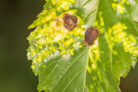
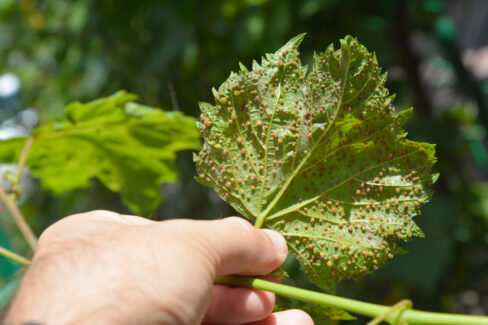
Active throughout the spring and summer, these mites make their presence known by causing small, pimple-like bumps on the tops of the leaves. As the infestation progresses, you’ll notice a white, felt-like coating on the underside. Be careful not to confuse this with powdery mildew, which looks similar. To manage them, pluck off any affected leaves immediately. If things get out of hand, an organic spray based on rapeseed oil can help get the population under control.
Dealing with the Grape Leaf Roller
The Grape Leaf Roller (or “Rebenstecher”) is a flashy little beetle with a metallic gold, blue, or violet body. You’ll usually spot them during the warmer months from April to September. They are particularly destructive because the females cut into the leaves and roll them up to lay eggs, causing the foliage to wither and drop off.
Keep a close eye on your vines and hand-pick any beetles you see. Make sure to remove and dispose of any rolled-up leaves you find. Pro tip: These beetles often migrate from nearby deciduous trees, so try to plant your grapes a bit further away from large leafy trees if possible.
Dealing with Black Vine Weevils
The Black Vine Weevil is another common culprit that doesn’t spare the grapevine. The tricky thing here is that both the adult beetles and their larvae do damage—the adults munch on the leaves while the larvae go after the roots. The most effective (and eco-friendly) way to fight back is by using beneficial nematodes. These tiny roundworms act as a natural trap, hunting down the larvae in the soil.
A Note on Insecticides
While it might be tempting to reach for a heavy-duty chemical spray, using synthetic insecticides on your grapes isn’t a great idea. Not only can it affect the quality and safety of the fruit you’re planning to eat, but many of these chemicals aren’t even permitted for use in home gardens. Stick to natural methods to keep your harvest clean and delicious!