Privet (Ligustrum) is famous for being incredibly tough and resilient, which is why it rarely deals with pest problems. However, “rarely” doesn’t mean “never.” Every once in a while, a few uninvited guests might show up in your hedges. Here’s a quick guide on what to look out for and how to handle it like a pro.
Common Privet Pests
Privet is one of those garden staples that almost never gets hit by pests or fungal diseases. But if your hedge is looking a little under the weather, one of these four culprits is usually to blame:
- Privet aphids
- Privet sawflies
- Black vine weevils
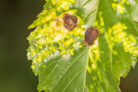
- Leaf galls (wart-like bumps)
Letting Nature Take Its Course
The cool thing about privet is that it’s often its own best doctor. A healthy, vibrant plant is usually strong enough to shake off a minor pest infestation on its own. You really only need to step in if the infestation is getting out of hand, or if you’re dealing with an older, more vulnerable shrub that needs a little extra TLC.
Dealing with Privet Aphids
You’ll know you have aphids if you see the leaves curling up, drying out, and eventually dropping off. Another dead giveaway? A “highway” of ants marching up and down the branches—they love the honeydew aphids leave behind.
To fix this, start by pruning away the affected foliage and disrupting those ant trails. If the aphids are really taking over, call in the cavalry: natural predators like ladybugs and lacewings are great at cleaning up the mess. You can also hang yellow sticky traps nearby to help catch the winged adults.
Spotting the Privet Sawfly
If you notice tiny, irregular holes chewed into your leaves, you’re likely looking at sawfly damage. These little guys love to snack on privet foliage. The best fix here is simple: just prune off the affected leaves and shoots to stop them in their tracks.
The Sneaky Black Vine Weevil
Unlike aphids or sawflies, black vine weevils do their worst work underground. They munch on the roots, which cuts off the plant’s ability to take up water. The most effective (and eco-friendly) way to fight them is with nematodes—tiny beneficial roundworms. These guys hunt down the weevil larvae in the soil. Once the larvae are gone, the nematodes naturally die off, leaving your soil healthy and your roots safe.
Bumps and Warts
Sometimes you’ll see little spots or hard, wart-like thickenings on the leaves or stems. While they might look a bit funky, these galls are usually harmless. They don’t pose any real threat to the health of your hedge, so there’s no need to break out the shears or treatments—you can just let them be!