Hardy climbing plants are the ultimate garden multitaskers—they dress up plain walls, add shade to pergolas, and stay tough even when the mercury drops. If you’re looking for greenery that can handle ice and snow without breaking a sweat, you’re in the right place. Here are the seven most popular hardy climbers for your backyard, plus a little “insider tip” at the end!
[[pflanzen]]
++Silver Lace Vine (Fallopia baldschuanica)
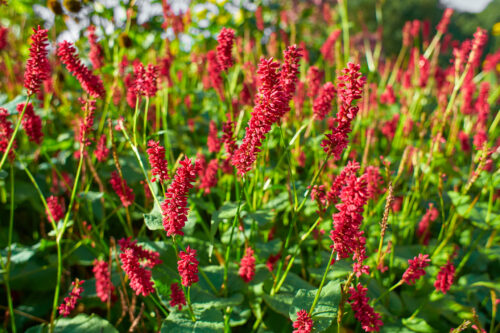
If you have a nutrient-rich spot and need coverage *fast*, the Silver Lace Vine is your best friend. This powerhouse can grow up to 15 feet in a single year, making it perfect for hiding an ugly facade in record time. Because it produces such a massive amount of foliage, you’ll need a sturdy support system—think heavy-duty stainless steel cables. From July through October, it’s covered in delicate white blossoms that make this ultra-hardy climber a real showstopper.
++Honeysuckle (Lonicera henryi)
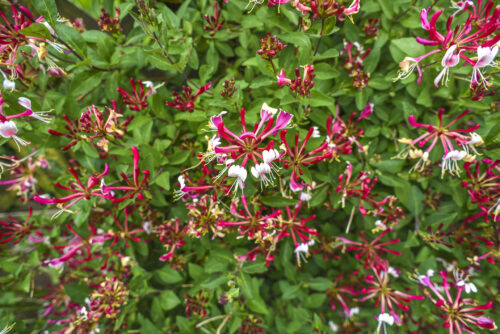
Henry’s Honeysuckle is all about that romantic garden vibe and an incredible fragrance that fills the air on warm summer evenings. The yellow-to-red flowers feature long, elegant stamens that pop beautifully against the dark green leaves. Since it’s evergreen, it’s a fantastic choice for a year-round privacy screen. It doesn’t have “sticky” aerial roots, so it won’t damage your siding, but it definitely needs a solid trellis to twine around.
++Climbing Hydrangea (Hydrangea petiolaris)
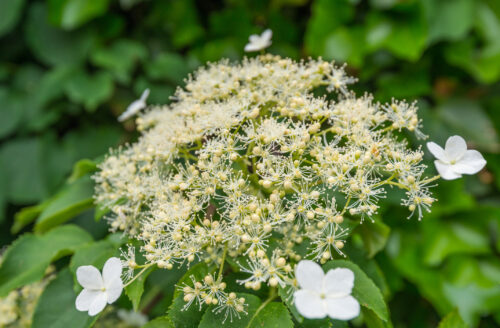
Climbing hydrangeas are pretty low-maintenance; they only need a little help from a trellis in their first year. After that, they use their own aerial roots to hang on, eventually reaching heights of up to 13 feet. In June and July, they produce stunning lacecap flower clusters that are a total magnet for bees and butterflies. They aren’t just winter-hardy; they’re also tough enough for urban gardens and can handle everything from full sun to deep shade.
++Hops (Humulus lupulus)
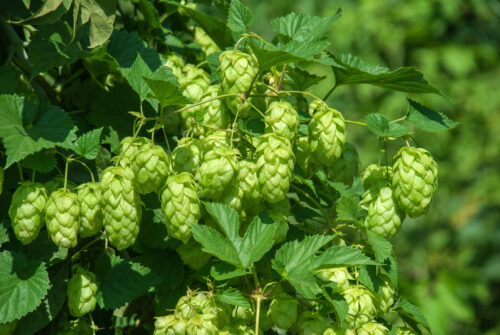
Hops are incredibly frost-resistant, dying back in the winter and sprouting fresh from the roots every spring. This vigorous grower is perfect for covering walls, pergolas, or even old, dead trees, reaching anywhere from 10 to 25 feet. In June, the plant produces subtle green flowers that turn into those iconic cone-shaped fruits. Hops are super adaptable, too—they’ll be happy whether you plant them in the sun or the shade.
++Wisteria (Wisteria sinensis)
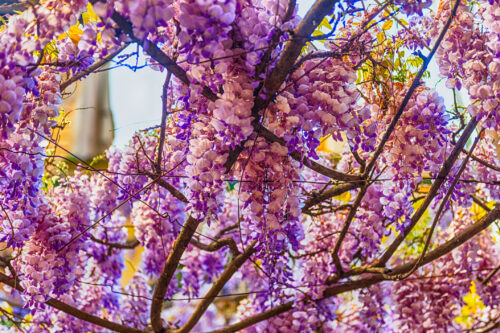
There’s nothing quite like the sight of Wisteria’s foot-long, drooping purple flower clusters in the spring. After the blooms fade, you’ll see bean-like pods that eventually pop open with a tiny “crack” to scatter their seeds. Because Wisteria is so strong and heavy, you absolutely need a heavy-duty support structure. To keep it looking tidy and ensure plenty of blooms for next year, make sure to give it a good pruning once or twice a year.
++English Ivy (Hedera helix)
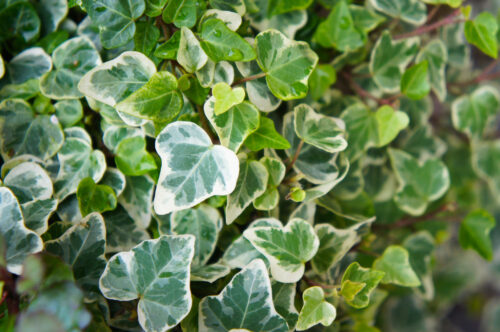
An ivy-covered wall has a classic, timeless charm. This is a “self-climbing” plant, meaning it doesn’t need a trellis—it uses tiny sticky roots to grab onto surfaces and can climb up to 15 feet. The thick, evergreen leaves grow so densely that they provide a total blackout screen for whatever is behind them. Ivy usually only blooms once it’s well-established (in the fall), providing a late-season snack for local pollinators.
++Clematis (Clematis)
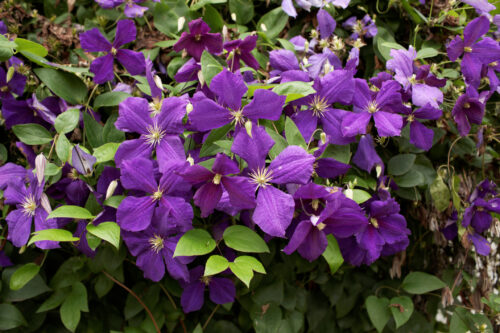
Clematis is a fan favorite because of the sheer variety of flowers—you can find them in everything from white and yellow to deep reds, pinks, and purples. The golden rule for Clematis is “cold feet, warm head,” meaning they like their roots in the shade and their flowers in the sun. Most varieties need a trellis or a grid to climb, using their leaf stalks to twist and anchor themselves as they grow.
%%Winter Jasmine (Jasminum nudiflorum)
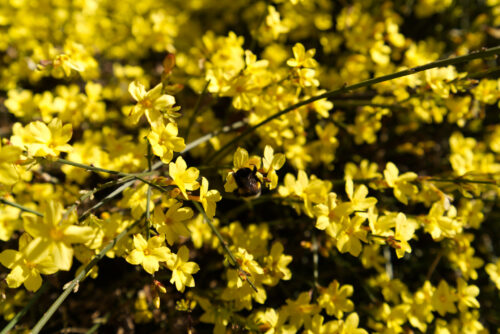
Here’s our secret tip: Winter Jasmine is one of the few plants that actually blooms in the dead of winter. Starting in December, its bright yellow flowers (which look a bit like Forsythia) begin to open. It uses its long arching branches to scramble up trellises, eventually reaching about 10 feet. Even though it’s very hardy, it’s a good idea to plant it in a spot protected from harsh winds so the winter buds don’t get damaged by extreme freezes.