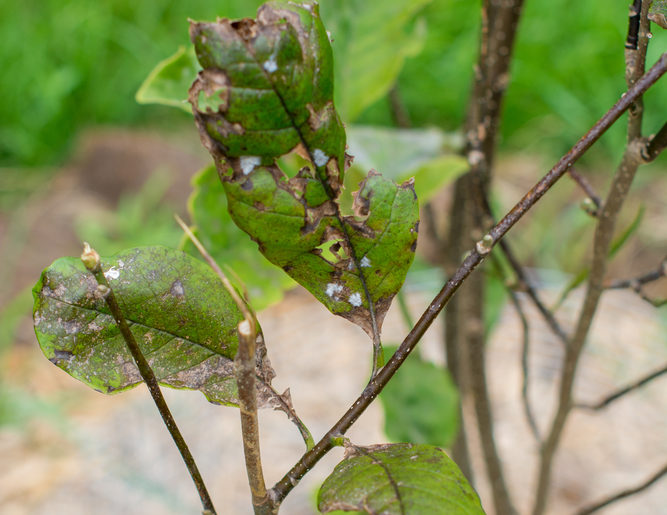
When it comes to checking in on your magnolia’s health, there’s no better “messenger” than its leaves. They’re basically a built-in health monitor that tells you if your tree is happy in its spot, fighting off a bug, or missing some key nutrients in the soil. That’s why I always recommend giving your magnolia leaves a quick once-over every time you’re out in the garden.
Brown Leaves on Your Magnolia
If you notice brown leaves, the most common culprit is a late spring frost nipping at the fresh growth. However, it could also be a sign that your tree isn’t thrilled with its location. Magnolias really crave a sunny spot that’s tucked away from harsh winds. On the other hand, if you’re seeing distinct brown spots rather than just crispy edges, you’re likely dealing with leaf spot disease. To keep things healthy and prevent a breakout, keep these tips in mind:
- Keep the canopy thinned out so air can circulate.
- Avoid getting the leaves wet when you water (always aim your hose at the base of the trunk).
- If you see infected leaves, prune them off immediately to stop the spread.
Yellow Leaves
Yellowing leaves (which gardeners often call chlorosis) are usually a cry for help regarding nutrients. Magnolias are “acid-loving” plants, meaning they thrive in soil with a pH between 5.5 and 6.8. If your soil is too heavy or stays soggy (standing water is a big no-no), the roots can’t “breathe” or soak up what they need. Your best bet here is to loosen up the soil and mix in some high-quality rhododendron potting soil to give it that acidic boost.
Magnesium or Iron Deficiency
If those leaves are turning yellow but the veins stay green, you’re likely looking at a magnesium or iron deficiency. This is super common! To get that vibrant green color back, you’ll want to give your tree a little snack. Use a fertilizer specifically formulated for rhododendrons to balance out the soil and get those nutrient levels back where they belong.