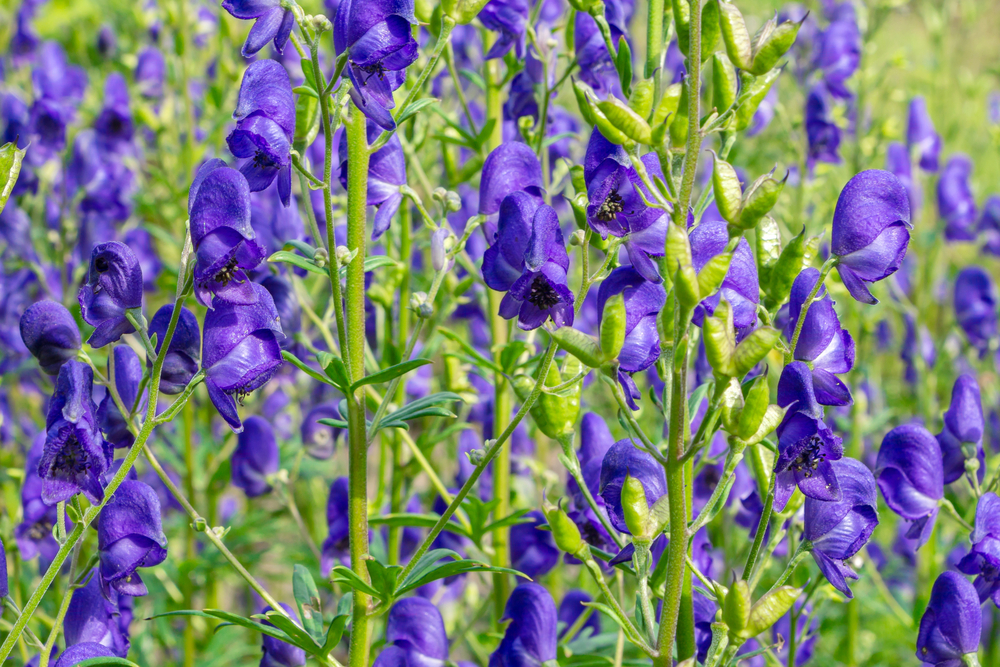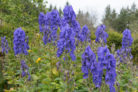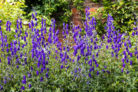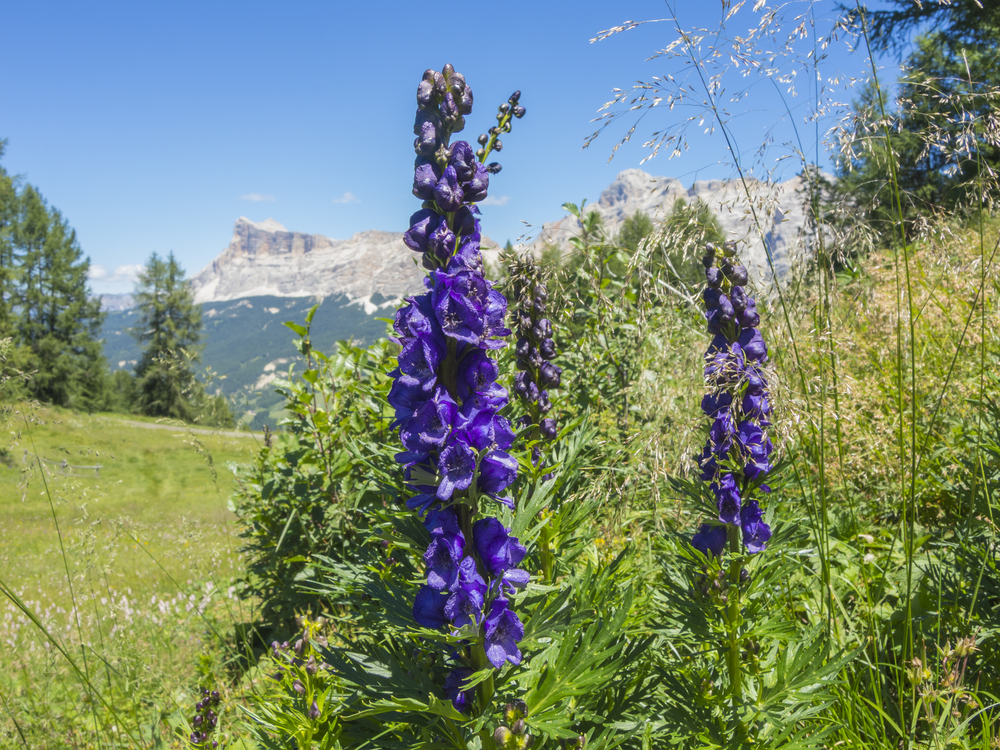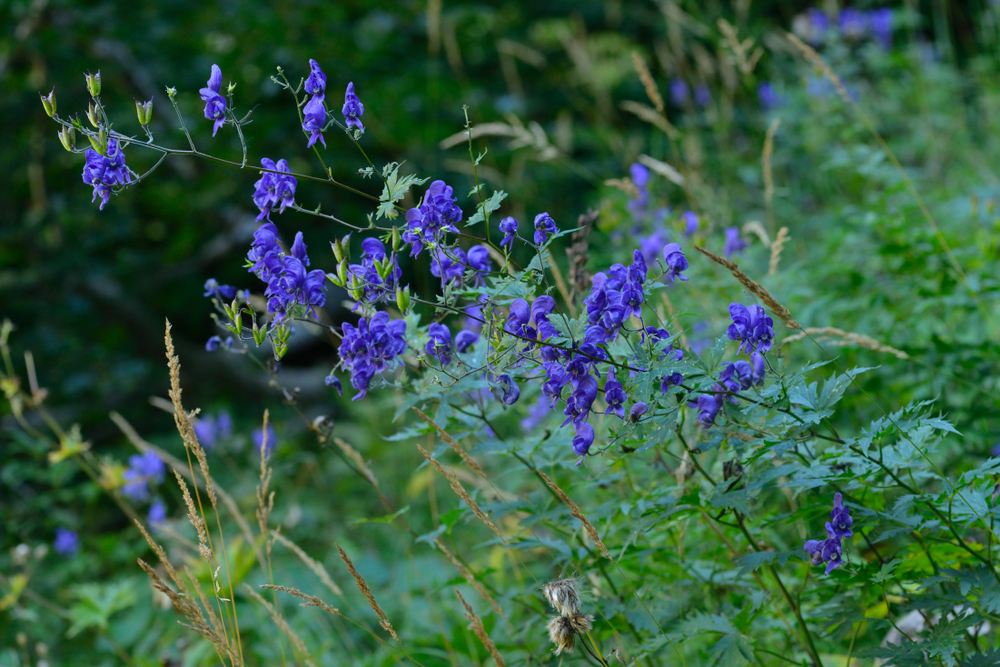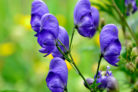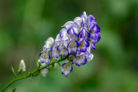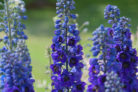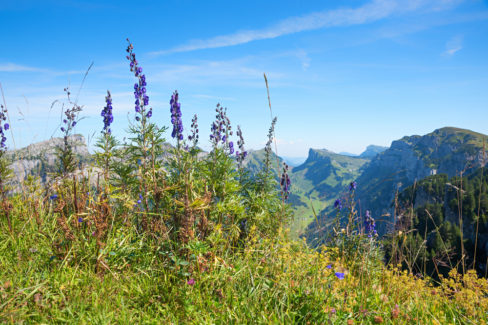
Monkshood (Aconitum) is a true mountain beauty. In the wild, it’s actually a protected species, so you should never pick it or try to dig it up. Another big reason to admire it from a distance? It’s incredibly toxic. If you’ve fallen in love with its striking look and want it for your own backyard, the best (and safest) way is to buy plants or seeds from your local nursery or garden center.
Where It Grows in the Wild
Naturally, Monkshood loves the cool, rugged mountain regions of Europe. You’ll usually spot it hanging out in spots like:
- Damp meadows and pastures
- High-altitude wildflower fields
- Rocky mountain slopes
- Riverbanks and creek edges
- Natural springs
- Floodplains and boggy woodlands
In the Alps, it thrives at altitudes up to 8,000 feet, soaking up the nutrient-rich, moist soil. You can also find it in the Pyrenees and throughout Scandinavia. While the classic deep blue is most common, there are some other fascinating varieties out there:
- Wolfsbane (Yellow Monkshood): Found across Eurasia with distinct yellow blooms.
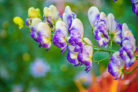
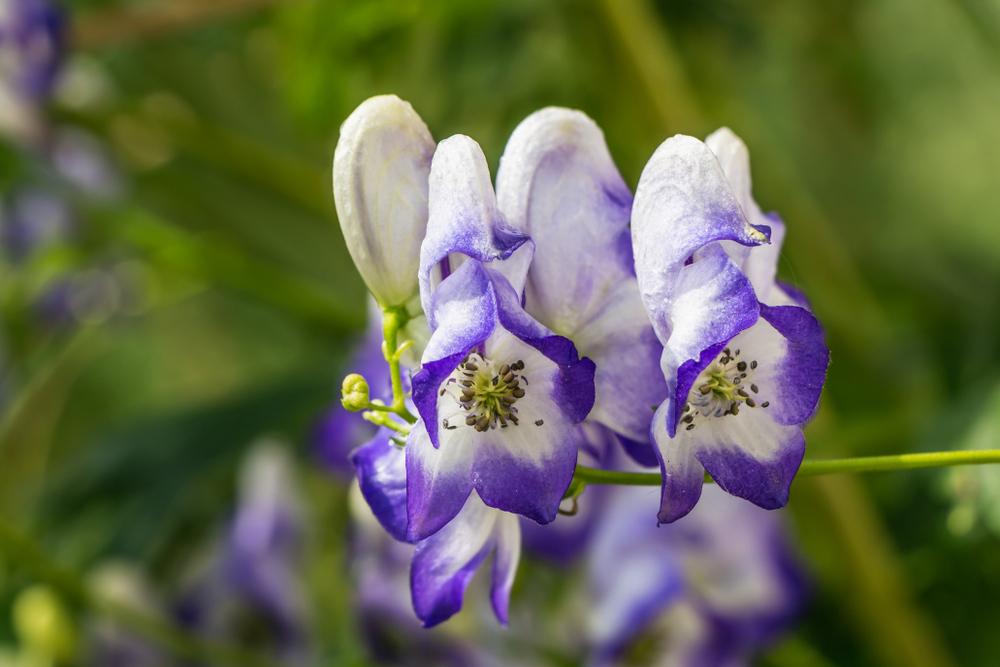
- Variegated Monkshood: Features beautiful white-and-blue patterned flowers, native to European mountain ranges.
- Northern Monkshood: A tall grower (up to 6 feet!) with blue-violet flowers and a unique curved spur.
- Aconitum ferox: A blue variety from the Himalayas. It’s often called the most poisonous plant in the world and grows in the Darjeeling Hills of India.
The Perfect Spot: Light and Soil
If you want to keep Monkshood happy, think “cool and damp.” It thrives in partial shade with plenty of moisture. A spot under the dappled light of trees or shrubs is ideal. The soil should be rich in organic matter (humus) and have a bit of clay to help hold moisture. One pro tip: make sure the ground stays relatively cool even during the heat of summer.
Why It’s Disappearing in the Wild
Sadly, wild Monkshood is becoming harder to find. Because it’s so toxic, farmers often remove it from pastures to protect their livestock. On top of that, its natural habitats—like floodplains and riverbanks—are being lost to urban development and water management projects. Even roadside mowing prevents the plant from dropping its seeds, stopping new generations from growing.
By planting Monkshood in our gardens, we can help keep this stunning species going. Just remember: safety first! Always take the necessary precautions when handling it to avoid any accidental poisoning.