Mosses are spore-bearing plants, which means they don’t reproduce using traditional seeds. Instead, they use tiny spores to get the job done. While nature usually handles the heavy lifting, you can actually take control of the process if you’re looking to add some lush, green moss to your own garden.
Understanding Moss Spores
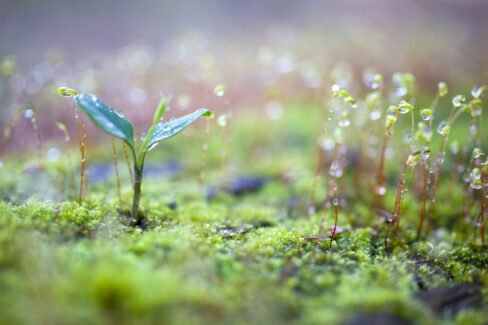
Since mosses are spore plants, they can reproduce on their own or with a little help from you. These spores are microscopic—about 0.001 mm—so you won’t see them with the naked eye. What you *can* see are the spore capsules. These sit on tiny stalks above the moss cushions and are about 2 mm wide; they act as little containers for the spores.
How Moss Spreads via Spores
In the wild, moss spreads by launching its spores out of those capsules with enough force to cover a surprisingly large area. If you want to skip the guesswork and grow your own moss from scratch, you can easily harvest these spores yourself.
Here’s what you’ll need to get started:
- Spores (either harvested from existing moss or bought at a garden center)
- Seed trays with the right substrate
- A fine paintbrush
Follow these steps to get growing:
- Fill your tray with a “lean” soil mix. A sandy peat blend or a specialized succulent/cactus soil works perfectly.
- If you’re harvesting your own, snip off the spore capsules and gently crush them on a flat surface.
- Use your fine paintbrush to pick up the tiny spores and dust them onto the soil in your tray.
- Skip the spray bottle at first! You don’t want to wash the spores away. Instead, water the tray from the bottom.
- To keep things nice and humid, cover the tray with clear plastic wrap or a plastic bag.
- Keep the tray in a shady spot and remember to bottom-water every few days.
- Only remove the plastic cover once you see a visible green film developing on the soil.
Once your moss cushions have reached a healthy size, you can move them into a pot or transplant them directly into your garden.
Finding the Perfect Spot
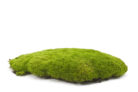
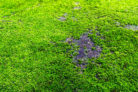
Moss thrives in cool, shady, or partially shady areas with lean, acidic soil. When you’re ready to plant your homegrown moss, space the clumps about four inches (10 cm) apart. Before you know it, they’ll grow together to form a thick, velvety green carpet.
Buying “Moss Seeds”
A quick heads-up: if you see “moss seeds” at the store, they are usually Scotch Moss (Sagina subulata). Technically, this isn’t one of the many true moss species—it’s actually part of the carnation family. However, because it looks and grows so much like moss, it’s often treated the same way in landscaping.
The big plus? Scotch Moss is much tougher and can handle foot traffic better than true moss, making it a fantastic lawn alternative.