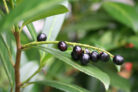
If you’re trying to identify shrubs in the wild or in your own backyard, the fruit is often the best “smoking gun” you’ve got. To help you out, I’ve put together a guide to seven of the most common native shrubs with black berries, plus one “insider tip” you won’t want to miss.
[[pflanzen]]
++Scotch Rose (Rosa pimpinellifolia)
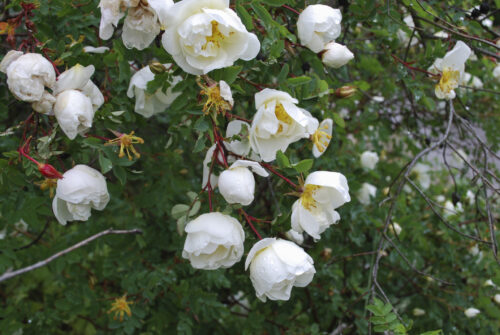
This wild rose is a tough cookie, often found hugging the ground in sandy coastal dunes. It’s armed to the teeth with sharp thorns and bristles, and because it spreads via suckers, it can take over a large patch of land over time. Starting in May, it’s covered in beautiful, creamy white flowers with bright yellow centers. By September, these turn into spherical rose hips that are so dark they’re almost black—a stunning contrast against the yellow-brown autumn leaves.
++Wayfaring Tree (Viburnum lantana)
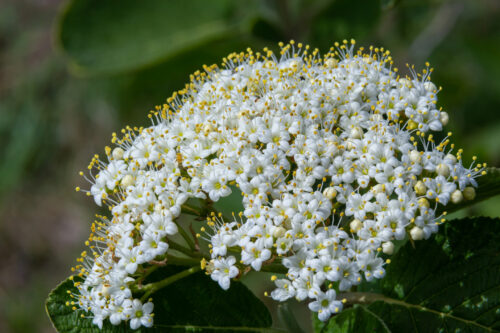
In the wild, this densely branched shrub loves sunny forest edges and open woods. You can recognize it by its thick, leathery leaves that have a wrinkled, matte green surface. In May, the shrub shows off white, flat-topped flower clusters that can grow up to four inches wide. The berries start out red but eventually turn black. You’ll often see them shrivel up and hang onto the branches well into winter. Just a heads-up: all parts of this plant are toxic.
++Deadly Nightshade (Atropa belladonna)
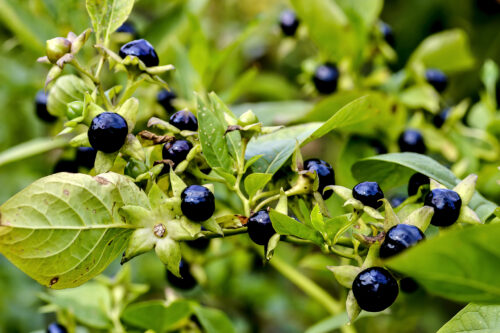
While it can grow up to five feet tall and looks quite sturdy, Deadly Nightshade isn’t actually a shrub—it’s a perennial herb. It’s highly toxic, so definitely look but don’t touch! The young leaves and the flower calyx are slightly fuzzy. Its bell-shaped, purple flowers hang delicately downward, usually appearing solo. From August through October, these turn into shiny, ink-black berries about half an inch wide.
++Blackberry (Rubus fruticosus)
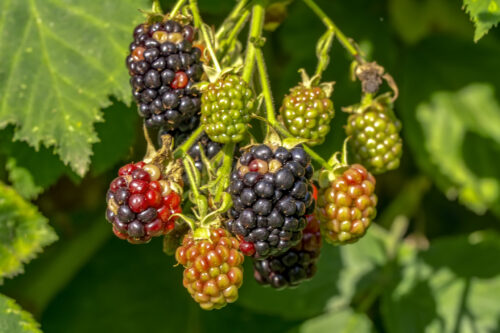
There are actually thousands of wild blackberry micro-species out there! These shrubs grow thorny canes that either stand upright or arch down to the ground. In mild climates, the serrated leaves might even stay green all winter. You’ll see white flower clusters from June to August, followed by those delicious, deep black berries we all love. Pro tip: they’re at peak flavor when they pull away from the stem with the slightest touch.
++Common Juniper (Juniperus communis)
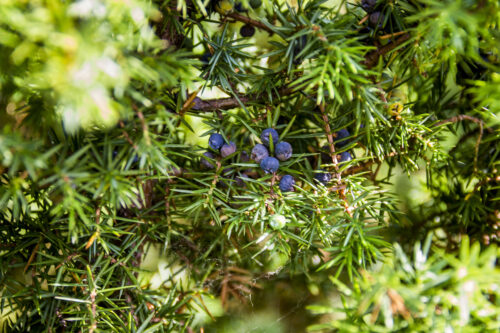
Juniper berries are famous as a spice (and the key ingredient in gin!). This evergreen can grow as a low crawler or a small upright shrub. You can spot it by its needle-like leaves that grow in whorls of three. Juniper blooms in late spring, producing small “berry-cones.” They start out green and turn a dark, dusty black-blue, but patience is key—they take two full years to ripen!
++English Ivy (Hedera helix)
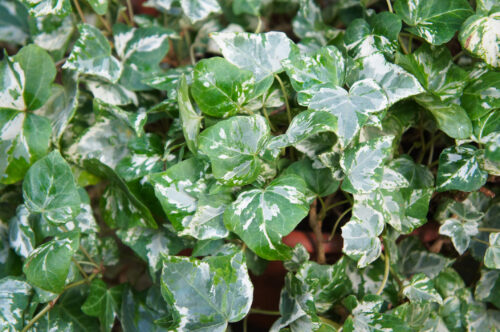
Ivy is a champion climber, using tiny aerial roots to scale trees and walls. Interestingly, the leaves change shape: they’re lobed on the climbing stems but oval on the flowering branches. Ivy only flowers once it’s mature, providing a vital late-season nectar source for bees in the fall. The resulting berries are dark purple to black. Just remember: these berries are very poisonous to humans.
++Black Elderberry (Sambucus nigra)
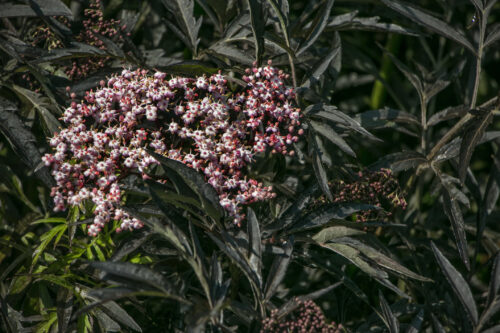
Both the fragrant white flowers and the dark purple-black berries are famous in the kitchen. However, the raw berries contain a mild toxin called sambunigrin, so you must cook them before eating! This shrub is super common and can grow quite large—up to 35 feet. It has compound leaves and produces massive, umbrella-like clusters of sweet-smelling flowers in early summer.
%%Blackthorn, Sloe (Prunus spinosa)
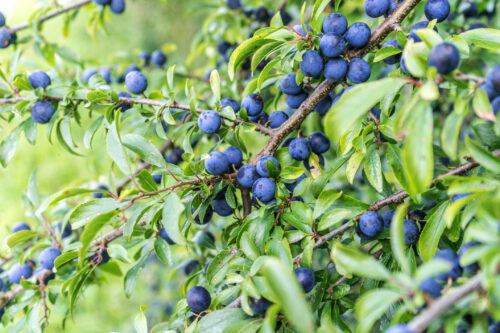
Here’s my secret tip: the Blackthorn. You’ll find it everywhere along roadsides and in hedgerows. It’s one of the first to bloom in early spring, covering itself in tiny white flowers before the leaves even appear. The fruit, known as “sloes,” look like small blackish-blue plums. They are incredibly tart and astringent at first, but if you wait until after the first hard frost to harvest them, they develop a much richer, mellow flavor.