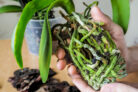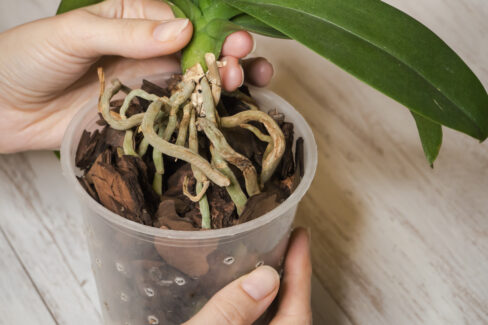
When you look at most orchids, the first thing you notice (besides those gorgeous blooms!) is the wild tangle of aerial roots spilling over the sides of the pot. While your first instinct might be to grab the garden shears, hold that thought! Those air roots are actually vital for your plant’s health and survival.
Why Orchids Have Air Roots
Most of the exotic orchids we love to grow come from tropical rainforests. In the wild, they don’t grow in dirt; they’re “epiphytes,” meaning they live high up on tree branches or rocky cliffs. Those long aerial roots act like anchors to keep them attached to their perch.
But they aren’t just for hanging on! These roots are like sponges, soaking up moisture and nutrients directly from the humid air and passing rain showers.
Caring for Aerial Roots
To keep your orchid thriving and help it produce those stunning flowers, you need to treat the roots right. Here are the golden rules:
- Give them plenty of light.
- Keep them hydrated.
- Never cut off healthy green roots.
Let There Be Light
Believe it or not, orchid roots actually need light to do their job. Most orchids come in clear plastic nursery pots, which we usually hide inside a decorative ceramic planter. If you want to be an orchid superstar, ditch the opaque planter! Using a transparent decorative pot allows light to reach the roots, which is much closer to how they grow in nature.
Keep Them Hydrated
Since these roots are designed to pull moisture from the air, they love a good misting. Use lukewarm, filtered water (or rainwater) to give them a spray. Every once in a while, you should also give the whole root ball a “soak” by dipping it into room-temperature water for a few minutes so the roots can fully hydrate.
Don’t forget to add a bit of liquid orchid fertilizer to your routine. This ensures the roots are delivering all the essential nutrients the rest of the plant needs.
Put Down the Scissors
I can’t stress this enough: never cut off healthy green aerial roots, even if they’re looking a bit wild and unruly outside the pot.
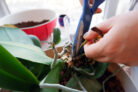
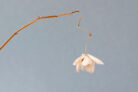
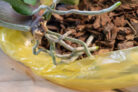
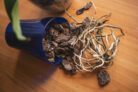
The only time you should reach for the shears is when you’re repotting. Use a sharp, sterilized knife to trim away roots that are shriveled, dried out, or mushy. You can tell the difference by the look and feel: healthy roots are firm and green (or silvery-green), while dead ones are brown and brittle.
If you do accidentally nick a healthy root, don’t panic—they’re pretty resilient. Just dab a little cinnamon or charcoal powder on the cut to act as a natural disinfectant and keep pests away. Once you’ve cleaned them up, you can tuck all the [lnk u=orchideen-umtopfen-luftwurzeln]roots[/lnk] back into their new home.
Terrestrial Orchids
Just a quick heads-up: not every orchid is an air-dweller. While epiphytes are the most common house guests, there are “terrestrial” orchids that grow right in the ground. These guys have standard root systems and won’t sprout aerial roots. Some famous examples include the native European species like the Lady’s Slipper or the Marsh Orchid. And here’s a fun fact: the Vanilla orchid (*Vanilla planifolia*)—the only orchid we use as a crop—is also a ground-dweller!