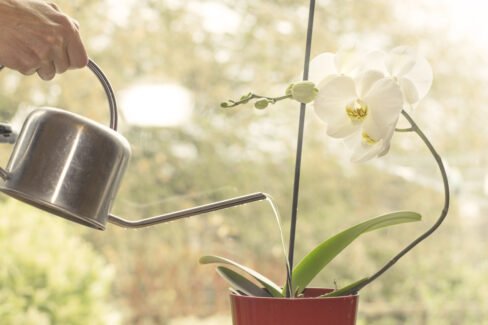
Getting your watering routine right is absolutely essential if you want your orchids to thrive. It’s one of those things where a few simple mistakes can lead to some pretty serious damage. While forgetting to water is one thing, the real orchid-killer is usually overwatering.
Say No to Soggy Roots
Even though orchids naturally grow in those lush, humid tropical rainforests, they aren’t fans of sitting in a puddle. Their aerial roots need to breathe! If the potting mix stays soggy for too long, you’re looking at root rot. Once those roots start to decay, they can’t do their job of drinking up water and nutrients, which eventually means bad news for the whole plant. #
Signs You’ve Overdone the Watering
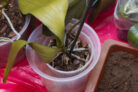
The most obvious red flag is standing water at the bottom of your pot or a potting mix that never seems to dry out. A quick trick? Pick up the pot. If it feels surprisingly heavy, the substrate is likely holding onto way too much moisture.
You might also notice yellowing leaves, shriveled aerial roots, or just a plant that looks like it’s struggling to grow. Here’s the tricky part: these can also be signs that your orchid is too dry. That’s why it’s super important to check the moisture level of the mix immediately to see what’s really going on.
Emergency Repotting for Wet Orchideen
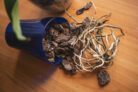
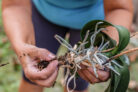
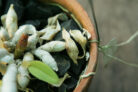
If you find your orchid sitting in a swamp, your best bet is to repot it right away into fresh, dry substrate. Grab a clean, sterilized knife and carefully trim away any mushy or rotten roots. As long as there are at least one or two healthy, firm roots left, there’s a good chance your plant will pull through!
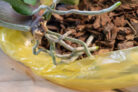
To help prevent future issues, start with a layer of expanded clay pebbles (LECA) at the bottom of the new pot for better drainage. Add a layer of fresh orchid bark, then gently “screw” the root ball into the pot. Fill in the gaps with more mix. Hold off on soaking the orchid for the first few days, and only give the aerial roots a light misting every few days while it recovers.
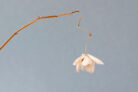
One pro tip: if your overwatered orchid is currently blooming, it’s best to cut the flower spike off. I know it’s heartbreaking, but it allows the plant to put all its energy into growing new roots instead of maintaining flowers. Once your orchid is back on its feet, it’ll reward you with plenty of new leaves and even more beautiful blooms down the road!