There are plenty of great reasons to grow sunflowers in your garden. Now, it’s all about the execution! Because let’s be honest: the way you plant a sunflower determines exactly how it’s going to bloom—either spectacularly or… not so much. Let’s not leave their start in life to chance!
Choosing the Right Variety
When it comes to sunflowers, the market is packed with countless varieties. Most of them rock that classic yellow, but they differ wildly in size. Plus, you can choose between single-petal and double-flowered (fuzzy-looking) types. While beauty is in the eye of the beholder, the size of the plant is a major factor to consider. While giant sunflowers have plenty of room to reach for the sky in a garden bed, smaller sunflowers are much better suited for pots on the balcony. There are even dwarf varieties now that stay under 15 inches tall.
Pro Tip:
Check out the “Evening Sun” variety. As the name suggests, these blooms feature stunning shades of red and bronze, reminiscent of a sunset. It’s definitely one of the most interesting varieties out there.
Starting Seeds vs. Buying Young Plants
Whether you buy “ready-to-go” starts at the garden center or grow them from seed at home usually comes down to cost and variety. If you want to start your own, get moving in early March. Finding seeds is a breeze—every hardware store and supermarket has them in the spring. For more exotic varieties, online seed shops are your best bet.
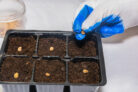
- Sow seeds in small pots.
- Use seed-starting mix or standard potting soil.
- Plant 3–5 seeds per pot, about an inch deep.
- Keep them in a bright, warm spot and keep the soil moist.
- Once the first pair of true leaves appears, thin them out so only the strongest seedling remains.
- Keep them indoors until it’s time to plant.
- Only repot if necessary (like if roots are poking out of the drainage holes).
When to Plant
Since annual sunflowers and many perennial types are not frost-hardy, you shouldn’t move them outside until mid-May (after the last frost). This goes for potted sunflowers too—they shouldn’t live on the balcony full-time until the weather warms up.
If the forecast looks great, you can plant a few days early. Just keep a close eye on the thermometer; be ready to cover them up or bring them inside if a cold snap hits.
The Best Spot and Soil
To help a sunflower reach its full potential, it needs a spot with full sun. Just make sure the location is airy but not too windy. It also helps if there’s something nearby to tie the stalk to for support. For container gardening, a south-facing balcony is perfect. The soil should be loose, well-draining, and rich in nutrients.
Planting Sunflowers in the Garden
- Before planting, enrich the soil with plenty of mature compost. If you don’t have any, organic fertilizer like horn meal works great too.
- Give each plant enough space from its neighbors. This prevents a “turf war” over nutrients. Experts recommend a distance of 15–28 inches, depending on how big the variety gets.
- Give each plant a good, deep soak right after planting.
- If needed, drive a stake into the ground so you can tie the stem later. This helps it grow straight and stay stable against the wind.
Pro Tip:
Instead of transplanting in May, you can direct-sow sunflower seeds in the garden in late April. However, it’s a good idea to let the seeds sprout indoors first so the birds don’t snack on them before they have a chance to grow!
Planting Sunflowers in Pots
Sunflowers are perfectly happy in containers. Even though they stay smaller than they would in the ground, they still need a large pot. Make sure it’s deep enough, as the roots love to stretch downward. Also, drainage holes are a must to prevent root rot. Here are a few more tips for success:
- You can start seeds and keep them indoors starting in March.
- Move them to the balcony permanently only after mid-May.
- Stick to one sunflower per pot.
- Use a nutrient-rich, loose potting mix.
- Good quality garden soil is also fine.
- Consider adding a drainage layer (like gravel or clay pebbles) at the bottom.
Care and Overwintering
To ensure your plants grow strong and have an impressive blooming season, follow these care tips from day one:
- Water daily.
- Ideally, water in the morning.
- On scorching hot days, give them a second drink in the afternoon.
- Fertilize 1–2 times a week.
- In the garden, use compost, organic pellets, or liquid manure.
- In pots, use a standard liquid fertilizer for flowering plants.
- Don’t prune them, unless you’re cutting flowers for a vase.
- For multi-bloom varieties, deadhead the spent flowers to encourage more growth.
Annual sunflowers need to be replanted every year. In the fall, they produce ripe seeds that you can harvest for next year’s garden or as a snack. Perennial sunflowers, on the other hand, come back every year. Some non-hardy varieties need to spend the winter indoors, while frost-sensitive ones need a thick layer of mulch or leaves for warmth. Hardy varieties, like Jerusalem artichokes, can pretty much be left to their own devices all winter long.