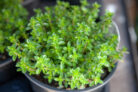
If you’ve already got a thriving thyme plant in your garden and want to add a few more of these Mediterranean beauties to your collection, you’re in luck! It’s actually super easy to propagate. You’ve got four main ways to get the job done:
- Seeds
- Cuttings
- Division
- Layering
Growing Thyme from Seeds
Thyme is a pro at self-seeding, but you can also take control of the process yourself. To use your own seeds, you’ll need to let them stay on the plant for a while—don’t go pruning right after the blooming period. You’ll know the seeds are ripe when they turn dark and feel hard. Once harvested, dry them out and store them in a paper bag in a cool, dry spot until you’re ready to plant. When it’s time for sowing, keep these tips in mind:
- Start them indoors on a windowsill in March.
- Move them to a cold frame in April at the earliest.
- They are light-dependent germinators, so don’t bury them under the soil.
- Pick a bright spot but avoid harsh, direct sunlight.
- Keep the soil consistently moist.
- They’ll start sprouting once temperatures hit about 60°F (15°C).
Planting Thyme Cuttings
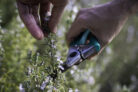
To grow new plants from cuttings, look for young, green side shoots that haven’t started budding yet. Snip off a piece at least 4 inches long and stick it straight into a pot filled with seed-starting mix. Keep the pot in a bright area away from direct sun. In about 6 to 8 weeks, your cutting should have a solid root system and be ready for its permanent home.
Dividing Your Thyme
Even if you aren’t looking to populate the whole neighborhood with thyme, dividing your plants is a great habit. it rejuvenates the herb and prevents it from getting woody or sparse in the center. In the spring, simply dig up the plant and carefully split the root ball into several sections. Then, just replant your new “babies” wherever you want them to grow.
Propagating via Layering
Propagating through layering is incredibly low-effort, though it does take a bit of patience (usually 3 to 4 months). By June at the latest, take a flexible side branch, pull it down to the ground, and cover a section of it with soil, leaving the tip poking out. You can use a small stone or a landscape pin to keep it in place. Once the branch has grown its own strong roots, just snip it away from the parent plant and move it to its new location.