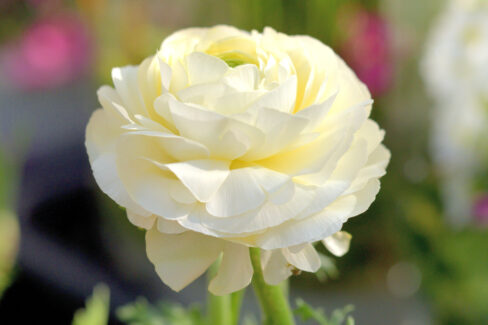
As one of our favorite early bloomers, ranunculus (or Persian Buttercups) usually hit the soil around March. By then, the weather is usually starting to cooperate so these frost-sensitive beauties don’t get zapped. If you get them in the ground then, you’ll be rewarded with those gorgeous, rose-like flower balls by May.
What’s the “Goldilocks” temperature for ranunculus?
Ranunculus are a bit picky—they like things moderate. Not too hot, not too cold. When the chilly season rolls around, you’ve got to make sure those tubers aren’t sitting in frozen ground:
- Freezing temperatures are the enemy; they’ll turn your tubers into mush, and once they’re rotten, there’s no saving them.
- Only a few specific varieties can handle a light frost.
- Before the first real freeze hits, it’s best to dig those tubers up.
- Store them somewhere dry, dark, and cool (around 45-50°F is the sweet spot).
- If you have them in pots, never leave them outside over the winter.
- If you live in a very mild climate (think Zone 8 or higher), you might get away with leaving them in the ground, but you’ll definitely want to tuck them in with some mulch, evergreen boughs, or garden fleece.
Germination Temperatures
If you’re starting your ranunculus from seed in trays, you’re looking for a germination temperature between 50 and 60 degrees Fahrenheit. Here’s a pro tip: don’t let it get warmer than 60°F, or the seeds might actually go dormant instead of sprouting! If you have a greenhouse where you can control the climate, try this trick:
- Keep the seed trays at about 43°F for ten days.
- Then, bump the temp up to 60°F for two days.
You should see sprouts popping up after about twelve days. Keep the seedlings in a cool spot until the danger of frost has passed in May and they’re ready for the garden.
Temperatures during Bloom Time
Ranunculus actually prefer a partially shaded to shady spot. Harsh, direct sunlight can actually scorch the delicate petals. They really thrive when the air is on the cooler side. This goes for cut flowers in a vase, too! Keep your bouquet out of the sun and move it to a cool room at night if you can. Keeping things cool and shady is the secret to making those blooms last as long as possible.
Winter Temperatures
Around mid-October, it’s time to dig up the tubers. Give them a good cleaning and let them dry out for a day or two. Once they’re dry, tuck them into baskets or wooden crates for winter storage. A frost-free garage or a basement where the temperature stays around 45°F is perfect. Just make sure their winter home stays dry and dark!