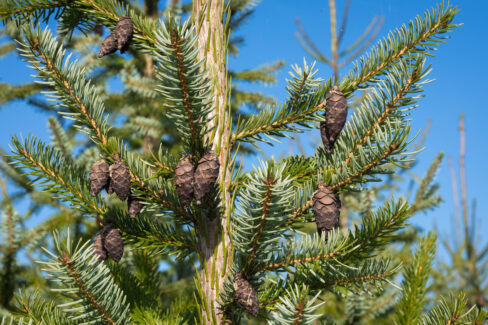
The Serbian Spruce is a stunning tree, but just like its cousins in the spruce family, it’s susceptible to a few common pests and diseases. For the most part, the risks and treatments are the same across the board, though there is one specific condition that this variety is particularly famous for.
Common Pests and Diseases
Generally speaking, your Serbian Spruce can run into the same diseases and pests as any other spruce tree. These issues don’t really discriminate based on the specific species; if it’s a spruce, it’s a target.
-The Usual Suspects
The most frequent headaches for Serbian Spruce owners are:
- Honey Fungus (Hallimasch),
- Bark Beetles,
- Red Rot,
- and the notorious “Omorika Decline.”
Dealing with Honey Fungus
Serbian Spruces are unfortunately quite vulnerable to Honey Fungus. It’s a bit of a paradox: while mushroom foragers consider these a delicacy once cooked (never eat them raw!), they are devastating to your garden. Even though they might look like a tasty treat to us, they can actually kill a Serbian Spruce entirely.
The Bark Beetle Threat
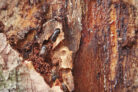
Just like with any other spruce, bark beetles can turn into a massive problem fast. Keep an eye out for the European Spruce Bark Beetle (the “Eight-Toothed” beetle), the Six-Toothed Spruce Bark Beetle, and the Lineate Wood Borer. These little guys are the ones gardeners dread the most.
The Lowdown on Red Rot
An infection of Red Rot usually shows up in one of two ways. If it’s “wound rot,” the fungus stays mostly in the inner core of the trunk. However, if it’s “root rot” (Heterobasidion), the fungus attacks the root system and rots the entire tree from the inside out.
Understanding Omorika Decline
“Omorika Decline” actually gets its name from the Serbian Spruce itself (botanically known as *Picea omorika*). But don’t let the name fool you—while it’s named after this tree, it can strike other spruce species too.
This isn’t caused by a bug, but rather environmental stress. It usually happens when there’s too much chlorine or not enough magnesium in the soil. Compacted soil and wild, fluctuating weather patterns only make things worse.
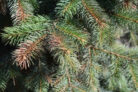
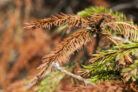
In the early stages, you’ll notice needles turning brown, which eventually start to drop off. If the condition gets bad enough, the whole tree can unfortunately die back.
When is it time to say goodbye?
The tricky part about these pests and diseases is that the symptoms are often hard to spot until it’s too late. By the time the damage is obvious, the tree is often so far gone that the only real solution is to cut it down to prevent the issue from spreading to the rest of your yard.