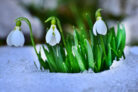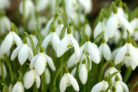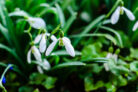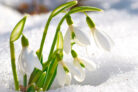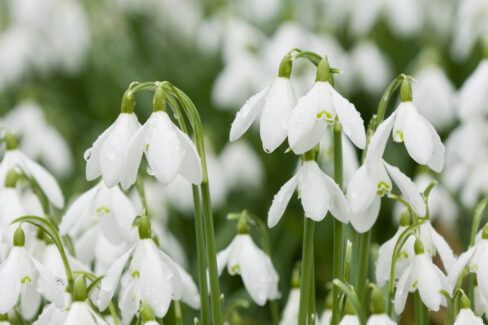
As the name suggests, snowdrops are those tough little beauties that start popping up while there’s still a blanket of white on the ground. Almost all of the twenty different species are early bloomers, often pushing right through the frost to say hello.
When Do Snowdrops Bloom?
Snowdrops are definitely early birds! By February, you’ll usually see their green tips and dainty white bells peeking out from the snow. Of course, nature has its own schedule—depending on the specific variety and the weather, they might show up a little earlier or later. Things like your soil quality, where you plant them, and when they went into the ground also play a big role. Here’s a quick breakdown of when different types show off:
- Wild species and some early varieties can actually start blooming in October and last through spring.
- Late-blooming varieties might wait until April to make an appearance.
- The most common types usually hit their stride between January and February.
- If you live in a particularly cold or snowy region, expect them to be about four weeks late to the party.
- By May, all snowdrop species have usually finished their show for the season.
Transplanting and Propagating Your Snowdrops
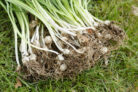
If you want more of these beauties in your garden, you can propagate them during or right after they finish blooming. Just dig up the clump and gently pull the rootstock apart with your hands. These plants are incredibly hardy, so they handle this “tough love” just fine! While you’re at it, you can snap off the tiny offset bulbs (the “babies”) and plant them separately.
Right after the flowering period is actually the perfect time to transplant them. Carefully dig up the bulbs and move them to their new home. To keep your snowdrops happy, look for a spot that meets these vibes:
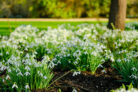
- Partial shade to full shade (they love living under deciduous trees or shrubs).
- Full sun is okay, but really only for the very early-blooming types.
- They still need plenty of light, even in the shade.
- Soil should be loose and stay slightly moist.
- They crave plenty of organic matter (humus).
- Aim for alkaline to neutral soil.
- Try to keep them away from evergreen/coniferous trees.
Late-Blooming Snowdrops
Believe it or not, three out of the twenty species actually bloom in the fall, sometimes as early as October. One of these is the Queen Olga’s snowdrop. It puts on a show in late autumn and usually wraps up its blooming cycle by November or December.