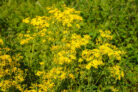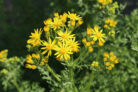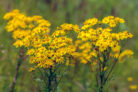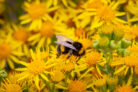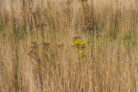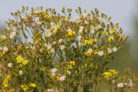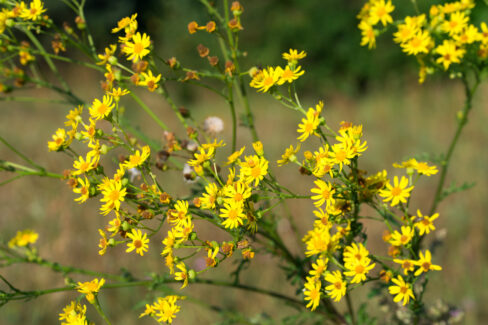
Insects absolutely love the bright yellow blooms of Tansy Ragwort. However, for humans and livestock, this plant is bad news—it’s actually toxic. If you spot it popping up in your yard, you’ll want to act fast to stop it from spreading.
Eco-Friendly Ways to Control Tansy Ragwort
Tansy Ragwort (sometimes just called Ragwort) is actually a major food source for bees and other pollinators. Because it has some ecological value, I always recommend trying biological or natural methods first. One way to handle it is by encouraging natural predators. Believe it or not, rabbits love munching on the roots, which literally tackles the problem at its source. Other natural “helpers” for biological control include:
- Certain beetles
- Specific fly species
- Moth caterpillars
For example, the caterpillars of the Cinnabar moth are famous for devouring the leaves and stems of the plant. Encouraging these little guys can be a huge help in keeping the Ragwort in check. That said, relying solely on beneficial insects can be a bit tricky since it’s hard to “direct” them exactly where you want them to go.
Mechanical Control: Getting Your Hands Dirty
If the infestation hasn’t completely taken over yet, mechanical removal is your best bet—it’s effective and environmentally friendly. When you dig this plant out, you have to be thorough. Ragwort has deep taproots with plenty of fine root hairs branching off. If even a small piece of the root stays in the ground, a new plant will sprout, and you’ll be back at square one.
Safety first: Always wear gloves! The toxins in the plant can actually be absorbed through your skin.
The perfect time to dig up those long roots is the day after a heavy rain when the soil is nice and loose. Grab a garden fork, dig deep, and lift the whole thing out. Dispose of all plant parts in your regular household trash. You can also put it in your organic waste bin; according to agricultural experts, the toxic alkaloids break down completely during the professional composting process.
Using Chemical Controls for Heavy Infestations
If you’re dealing with a massive breakout, you might need to turn to chemical options. A common herbicide used for this is Simplex. For the best results, wait until the leafy rosettes are about 6 inches tall. The spray works most effectively when the plant is in the middle of a strong growth spurt.
Once the herbicide has done its job, you must remove the dead plants from the area entirely. I recommend bagging them up tightly so no seeds drop out while you’re moving them. Always follow the manufacturer’s instructions to the letter. In many areas, potent herbicides like this should only be handled by people who have been trained in proper application and safety regulations.