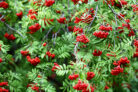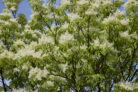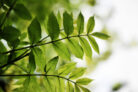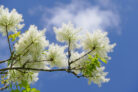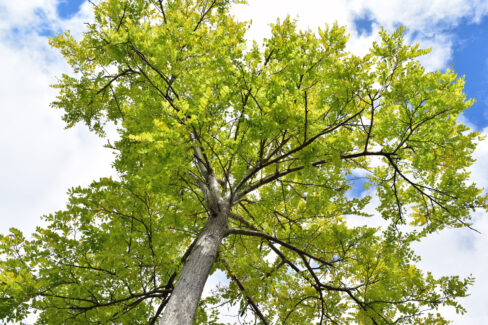
Hey fellow gardeners! Did you know that while there are dozens of ash species worldwide, three specific types call Germany home? Whether you know them for their iconic “helicopter” seeds or their impressive height, there’s so much to love about this tree. I’ve put together a quick cheat sheet with all the cool facts and info you need to know about the mighty ash.
The Ash Tree: A Quick Profile
Here are the must-know facts about the ash tree at a glance:
- The ash tree is actually a member of the olive family (Oleaceae).
- These giants can live to be up to 250 years old and reach a height of about 130 feet. That makes them one of the tallest deciduous trees in all of Europe!
- Out of more than 70 species worldwide, three are native to Germany: the Common Ash, the Manna Ash (Flowering Ash), and the Narrow-leafed Ash.
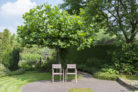
- When it comes to location, ash trees love full sun to partial shade. You’ll often find them along riverbanks or standing tall in parks, either in groups or as a stunning focal point on their own.
- They’re a bit picky about dirt—they prefer nutrient-rich, loamy, or lime-heavy soil with a pH ranging from slightly acidic to alkaline.
- The leaves are pinnate (meaning they grow in pairs along a stem with one at the tip) and have serrated edges. A single leaf structure can be about 12 inches long.
- During the summer, they’re a vibrant green, usually a bit lighter on the underside than on top.
- They hang onto their leaves for a long time, but they do drop them all in the winter. In the spring, they’re actually “late bloomers”—the leaves don’t reappear until after the flower buds have opened.
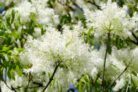
- The flowers are green and grow in panicles (loose clusters). They are monoecious and hermaphroditic, emerging from small, egg-shaped black buds about 5 mm in size.
- You’ll see them blooming from April to May, right before the leaves start to sprout.
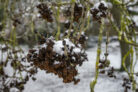
- Once pollinated, those flowers turn into winged nutlets—you probably know them as “helicopters” or “samaras” because of the way they spin to the ground.
- These seeds are about an inch long and half an inch wide.
- They ripen between August and October but often hang onto the branches all through the winter.
- When the tree is young, the bark is smooth. As it ages, it develops deep ridges and cracks running both vertically and horizontally.
- Ash wood is grayish and very heavy. It’s famous for being incredibly dense yet flexible.
- Because it’s so tough, ash wood is a top choice for hardwood flooring. It’s also the go-to material for tool handles, sports equipment, and even oars and paddles.
- The ash tree is a taprooter. This means it sends one massive main root deep into the earth with smaller roots branching off. Because they root so deeply, trying to dig up a mature ash tree is a massive chore—and usually pretty much impossible!
- The biggest threat to these trees right now is a disease known as ash dieback.
The Ash as the “World Tree”
If you’re into mythology, you might know that in Old Norse legends, the ash tree (Yggdrasil) is considered the center of the universe, often referred to as the “World Tree.” Pretty epic, right?