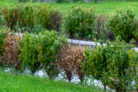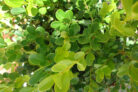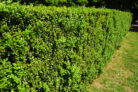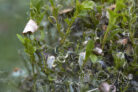
Boxwoods are legendary for their longevity—some of these hardy shrubs can thrive for centuries! But as any gardener knows, they can also go downhill fast in just a single summer. It’s not just exotic plants that make their way to our shores; uninvited pests and diseases follow along, too. Between the notorious boxwood moth and the dreaded boxwood blight, our favorite evergreens are facing some tough times.
What Can Bring Down a Boxwood?
Boxwoods deal with their fair share of issues, from various pests to frost damage during those harsh winters. Usually, if you catch the problem early, you can save your plant with a little TLC. However, if you’re dealing with a full-blown case of blight or an infestation of boxwood moth caterpillars, you’ve got a real fight on your hands. It takes quick action and a bit of luck to pull them through.
Quick Tip:
If a boxwood is too far gone, don’t hesitate—remove it from your garden immediately (roots and all). This stops the fungus or pests from spreading to your healthy plants.
Dealing with Boxwood Blight
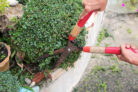
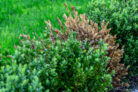
When we get long stretches of wet weather—or if you’re watering from above—the stems get soft and vulnerable. That’s when the fungus *Cylindrocladium buxicola* strikes. It loves temperatures around 77°F (25°C) and spreads like wildfire. You’ll notice leaves turning brown and entire branches drying out. Unfortunately, there’s no “magic cure” for boxwood blight yet. Your best bet is to prune away infected tips immediately. Some gardeners swear by dusting the plants with calcified seaweed (algae lime), but prevention is really the name of the game:
- Always water at the base; never get the leaves wet.
- Pick a sunny spot with plenty of airflow.
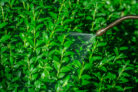
- Consider using a preventative fungicide spray.
Spotting Boxwood Moth Caterpillars
The boxwood moth arrived from Asia about a decade ago and has been a headache ever since. The moths lay their eggs on the leaves, and the large, green-patterned caterpillars can be surprisingly hard to spot until the damage is done. Since they start munching as soon as it hits 50°F (10°C), they can strip a bush in no time.
- Start checking your boxwoods for caterpillars in mid-March.
- Peer deep into the center of the bush.
- Look for tell-tale webbing.
- Stay vigilant! These guys produce several generations per year.
How to Fight Back Against the Boxwood Moth
Winning the battle against an infestation takes persistence because they often keep coming back. Early intervention is key. You can hand-pick the caterpillars and move them far away or prune out the webbing. If you have a larger hedge or a serious outbreak, try this pro trick:
- Lay a large tarp all the way around the base of the plant.
- Weigh down the edges with stones.
- Use a power washer (carefully!) or a leaf blower to blast the caterpillars out of the foliage.
- Gather them up from the tarp and dispose of them far from your garden.
If the “mechanical” approach isn’t cutting it, head to your local garden center and look for a biological treatment (like *Bacillus thuringiensis*) to get things back under control.