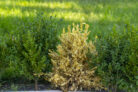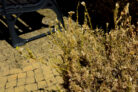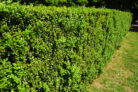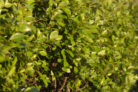
Whether your boxwood is a bit stressed or thriving with life, it doesn’t matter—no plant is safe from boxwood psyllids. And don’t just expect a few stray bugs; we’re talking about a full-on invasion! These little guys show up to feast on that delicious plant sap. While the adults aren’t a death sentence for your boxwood, their offspring—the hungry larvae—are the real troublemakers.
Spotting the Damage
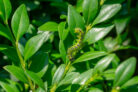
Let’s be real: who actually notices tiny boxwood psyllids (*Psylla buxi*) or their microscopic caterpillars unless they’re already looking for them? Usually, it’s only the gardeners who have survived a previous “bug war.” For the rest of us, it’s the damage to the plant that finally rings the alarm. Here are the three main signs to watch for, in the order they usually appear:
- Leaves start curling upward.
- The foliage begins to look like tiny spoons (often called “spooning”).
- White, cotton-like waxy tufts appear on the leaf surfaces.
- Sticky honeydew coats the leaves (which unfortunately attracts other pests and fungal diseases).
- The boxwood’s growth noticeably slows down or gets stunted.
Meet the Culprits: Timing and Appearance
The adult psyllids are active in the summer, starting around late May or early June. By late summer (July and August), they’re busy laying eggs. A few weeks later, tiny larvae hatch and settle in to spend the winter right there in your boxwood. Starting in late March of the following year, these larvae—now larger after molting several times—begin munching on the fresh new growth. Here’s how to identify them:
- Adults: About 3.5 mm long and greenish.
- They have wings and jumping legs (hence the “flea” nickname).
- They’re skittish! They’ll hop away the second you touch the plant.
- Larvae: Only about 0.5 mm when they first hatch.
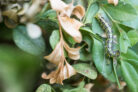
- They are yellowish-green, flat, and have black-tipped antennae.
- They cover themselves in waxy secretions that look like white flakes.
Fighting Back with Pruning
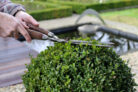
One of the best ways to handle these pests is with a good pair of shears. A trim in early spring helps remove the larvae that spent the winter in the tips of the shoots. If you spot adult psyllids during the summer, give your boxwood another trim in late summer to get rid of any newly laid eggs.
Pro Tip:
After pruning, make sure to bag up all the clippings and dispose of them in the trash. Whatever you do, don’t put them in your compost pile! These pests are survivors, and they’ll find their way back to your garden in no time.
The Soapy Water Solution
If you’ve caught the infestation early and it’s still manageable, you can use a simple soap solution. Mix about 2 tablespoons of liquid castile soap (or insecticidal soap) into a quart of water.
- Spray the entire boxwood thoroughly.
- Don’t forget the undersides of the leaves!
- Repeat the process every 2–3 days.
- Keep it up for about a month after the pests seem to be gone, just to be safe.
If the infestation is totally out of control and the soap isn’t cutting it, you can use a standard commercial insecticide as a last resort.
Pro Tip:
If you’re planning to plant a new boxwood, look for varieties that are naturally more resistant to pests, such as “Herrenhausen” or “Elegantissima.”