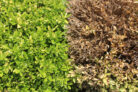
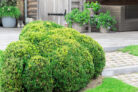
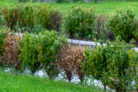
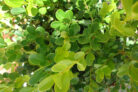
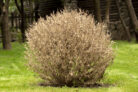
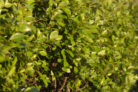
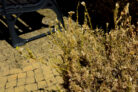
If your boxwood is looking a little under the weather, it’s usually just a minor nutrient deficiency or a common leaf issue. But if you notice entire branches dying off almost overnight, you’re likely dealing with something much nastier. The culprit is a fungus called *Cylindrocladium buxicola*, which causes the dreaded boxwood blight (or shoot dieback). It’s a tough opponent, but don’t panic—it’s not invincible.
Spotting Boxwood Blight
Keep a close watch during warm, humid weather, as that’s when this fungus loves to strike. If your plant is infected, you’ll start seeing these symptoms:
- Dark brown leaf spots that grow rapidly.
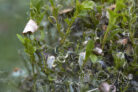
- Tiny white dots (spores) on the undersides of the leaves.
- Sudden leaf drop.
- Eventually, you’re left with nothing but a dry, brown “skeleton” of a branch.
How to Fight Back
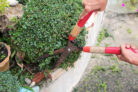
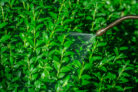
Unfortunately, there aren’t any sprays currently approved for home gardeners that can “cure” an active infection. Instead, your best weapon is a pair of pruning shears. You need to act fast to stop the fungus from spreading.
- Prune your boxwood immediately.
- Cut out every single branch that shows signs of infection.
- Don’t be afraid to cut back into the old wood.
- For large plants, a heavy “hard prune” is necessary.
- For very young or small plants, it’s often better to just dig them up and start fresh.
Since the fungus lives on the clippings, you need to be meticulous about cleanup. Collect every single leaf and twig and put them straight into the trash (not the compost!). To make this easier, try laying down a tarp or drop cloth before you start cutting. It’s also a smart move to scrape away and replace the top layer of soil, as spores can survive there for a long time and reinfect your plant later.
Preventing Dieback in the First Place
The secret to preventing blight is keeping things dry. This fungus thrives in moisture, so never prune your boxwood when it’s raining! When you water your boxwood, always aim for the base of the plant to keep the foliage dry. While you can’t control the rain, you can choose a planting spot with good airflow and plenty of sun so the leaves dry off quickly. Just be careful not to put them in a spot with *too* much scorching afternoon sun, or you’ll end up with sunburned leaves. Also, make sure you give your plants plenty of breathing room when planting a hedge.
Pro Tip:
Try dusting your boxwood leaves with garden lime (calcium carbonate) once a year as a preventative measure. For a prized specimen plant, you might even consider a temporary cover during long rainy spells.
Other Causes for Dying Branches
While viruses are rare in boxwoods, there are two other fungal diseases—boxwood canker and boxwood wilt—that can also cause branches to die back. Luckily, the treatment is the same: a heavy pruning.
However, if the “dieback” is caused by the boxwood moth (Cydalima perspectalis), pruning alone won’t save you. These hungry caterpillars can strip a bush bare in record time. Without leaves, the branches will eventually die. You’ll need to pick the caterpillars off manually or try some natural home remedies to get your shrub back on track.