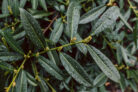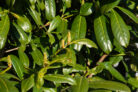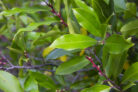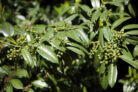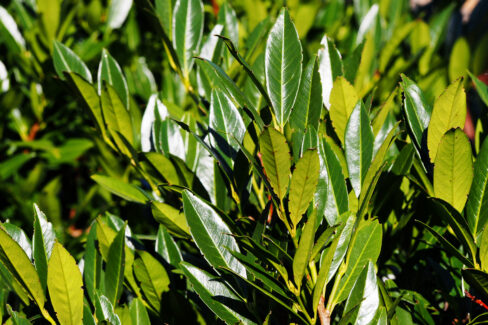
Finding brown spots on your cherry laurel is definitely a red flag. Not only does it ruin the look of those beautiful evergreen leaves, but it’s usually a sign that your plant is struggling with a deeper issue. If you spot discoloration, it’s time to do a little detective work to figure out what’s going on.
The two most common culprits are:
- Winter/frost damage
- Shot hole disease (a fungal infection)
Brown Spots from Winter Damage
Sometimes, a harsh frost is the reason behind those ugly brown patches on your cherry laurel. Keep in mind that while these shrubs are generally tough, some varieties aren’t 100% hardy in every climate. They might survive the winter, but their foliage often pays the price. You might notice tips freezing back, and come spring, instead of lush new growth, you’ll see leaves covered in brown spots. These eventually dry out and drop off the plant.
If frost is the culprit, your best bet is a good spring pruning. Wait until you can clearly see the “line” where the frost damage ends—look for areas where no new buds are forming and the bark has turned a dull grayish-brown. Cut the branches back into the healthy, green wood. Don’t worry; your laurel is resilient and will push out fresh new growth soon after.
Dealing with Shot Hole Disease
If the spots look a bit more “surgical,” you’re likely dealing with a fungus known as shot hole disease. You’ll recognize this by the distinct circular brown spots on the tops of the leaves. Eventually, the centers of these spots die and fall out, leaving round holes that make the plant look like it was hit by a shotgun blast. You’ll want to act fast as soon as you see these signs.
Here’s your game plan:
- Give the plant a thorough pruning.
- Cut away all infected foliage.
- Burn the clippings or put them in the trash (not the compost!).
Whatever you do, keep those infected leaves away from your compost pile! If you compost them, the fungus will just hang out and spread to the rest of your garden. If the infestation is really out of control, you might need to look into a fungicide, but keep in mind that those chemicals can linger in your garden’s ecosystem.