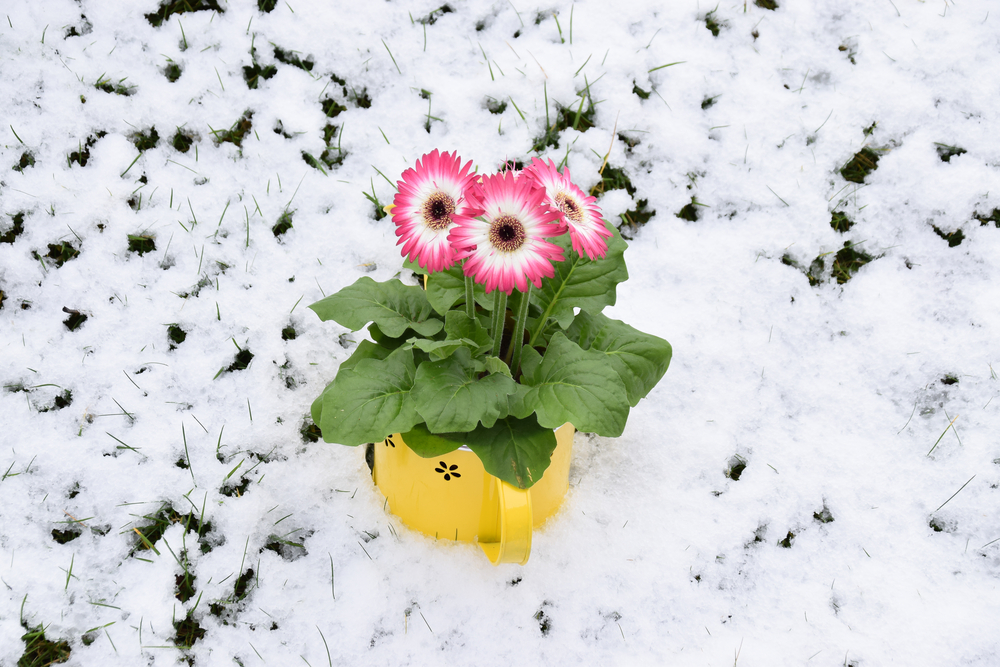
Since Gerberas originally hail from the tropics, these beauties are used to a much warmer lifestyle than most of our backyards provide. If you want to keep your plants happy and healthy for next year, you’ll need to take a few precautions. Out of the 30+ species of Gerbera daisies out there, only one is actually tough enough to handle the frost.
When Fall Rolls Around
If you’ve been growing your Gerberas outdoors in the garden, you’ll need to move them inside once autumn hits. Aim to do this between September and early October. When you’re ready to move them, dig up the root balls generously and place them in large pots with plenty of fresh soil.
Finding the Perfect Winter Home
Once they’re potted, find a bright, sunny spot inside for them to hang out. You’ll want to keep the temperature steady—somewhere between 53°F and 60°F (12-15°C) is the sweet spot. During this time, skip the fertilizer entirely; your Gerberas need their beauty sleep! To help them stay in “dormancy mode,” you should only water them about once a month. Come early May, you can start setting them outside during the day to get them acclimated to the fresh air again.
The Hardy Exception
There is one exception to the rule: the Garvinea. This specific breed was developed to be winter-hardy, meaning it can stay in the ground during the colder months. Most Garvinea varieties can handle temperatures down to about 23°F (-5°C). If the forecast shows a deep freeze lower than that, you should either bring them inside or give them some extra protection. A thick layer of straw over the trimmed plants usually does the trick to keep them cozy.
Here’s your quick winter game plan:
- Dig up your Gerberas and pot them.
- Find a bright, cool spot indoors.
- Go easy on the maintenance (no food, little water).
- Keep Garvinea varieties outdoors, but watch the thermometer!