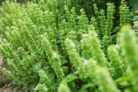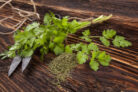
Basil is an absolute must-have for any herb garden. This aromatic powerhouse is the perfect companion for Mediterranean dishes and even adds a fresh twist to cocktails. If you want to keep your plants thriving, here is everything you need to know about harvesting it the right way.
A Little Background
Basil is a member of the mint family (Lamiaceae). It’s an herbaceous plant that we usually grow as an annual. There are tons of different varieties out there, ranging in color, size, and aroma, but they all share that signature spicy fragrance and are entirely edible. Depending on where you are, you might hear it called “King of Herbs” or even “Saint Joseph’s Wort.” While we associate it with Italy, it actually likely originated in Northwest India, where it has been cultivated for thousands of years.
When to Harvest
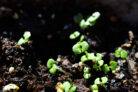
You can find potted basil in stores pretty much year-round. However, if you want to grow your own from scratch, you can start sowing seeds on a sunny windowsill around March or April. By April, you should be ready for your first harvest!
Can you overwinter basil? It’s possible, but it’s tricky. During the dark winter months, the plant grows very slowly, so harvesting leaves can actually weaken it. If you buy a grocery store basil plant in the winter, it’s best to use it up quickly. Those plants are raised in greenhouses with perfect light and heat, and they often struggle to adjust to the drier, dimmer conditions of a typical home.
How to Harvest Correctly
Here’s the golden rule: never just pluck individual leaves off the stems! If you do, the plant will focus its energy on growing tall and “leggy,” leaving you with very few leaves to enjoy later.
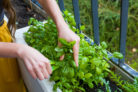
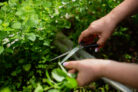
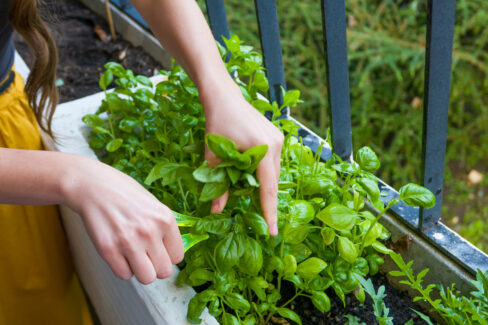
The right way to harvest is to pinch off entire stem tips from the top. You can use your fingers to snap off the fresh shoots or carefully use a knife. Always make your cut just above a pair of leaves.
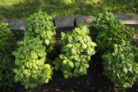
It doesn’t really matter how much of the stem you take, as long as you leave at least two pairs of leaves at the bottom. If you cut the plant all the way down to the soil, it won’t be able to grow back. By harvesting from the top, you’re actually encouraging the plant to branch out. New stems will sprout from the leaf axils, leading to a bushier plant and a much bigger harvest in the long run.
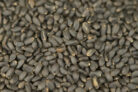
Another great perk of harvesting this way is that it delays flowering . If you just pick leaves, the plant will bolt (shoot upwards) and start producing flowers quickly. While the flowers are edible, they make the leaves taste slightly bitter. Once the plant flowers and produces seeds, it will eventually die off. Of course, if you want to collect your own seeds , go ahead and let it bloom! If you do, move the pot outside so the local bees and insects can help with pollination.
A Quick Guide to Varieties
The world of basil is surprisingly diverse. Whether you’re looking for unique colors or specific flavor profiles, there’s a variety for everyone—especially if you’re starting from seed.
- Genovese: This is the classic variety you see everywhere. It has large, green leaves and a flavor profile featuring notes of camphor, anise, and pepper.
- Pistou: A fine-leafed variety with dense foliage and a milder taste.
- Anise Basil: These green leaves sit on reddish stems and, as the name suggests, taste like anise with a peppery finish.
- Lemon Basil: This one smells incredibly citrusy. It’s delicious but has a specific flavor that doesn’t pair with every dish.
- Thai Basil: These varieties are sweeter, with a distinct licorice and anise aroma.
- Piccolino: A compact little plant that stays under 12 inches tall—perfect for small spaces.
- Bush Basil: A bit of a rarity. It tends to get woody, which actually makes it easier to overwinter. It has a camphor-anise flavor.
- Purple Varieties: Keep an eye out for ‘Dark Opal’, ‘Chianti’, or ‘Moulin Rouge’. These reddish-purple leaves are a bit more tart and carry a slightly spicy kick.
Pro Tip: You can also use your harvest to grow cuttings ! Just take a 3-4 inch stem and pop it in a glass of fresh water. With a little patience, it’ll sprout roots, and you’ll have a brand-new plant.