The maple family is huge—we’re talking over 100 different species, and some experts even say there are more than 200! While we don’t see all of them in our neck of the woods, there are a few common types you’ll run into all the time. Once you know what to look for, telling them apart is actually pretty easy.
How to Spot the Local Favorites
The big three you’ll likely encounter are the Sycamore Maple, the Norway Maple, and the Hedge Maple. The best way to play tree detective is to look at a few different parts of the plant to be sure.
Twigs and Buds
- Sycamore Maple: Look for smooth, gray bark and olive-green buds at the tips of the branches.
- Hedge Maple: This one has brown bark (sometimes with cool corky ridges). The buds are small, reddish-brown, and have a little bit of fuzz at the tips.
- Norway Maple: Features shiny, light brown bark. The buds are hairless, reddish, and can get up to about half an inch long.
The Leaves
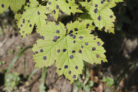
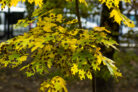
- Sycamore Maple: These have five lobes with V-shaped notches. They turn a beautiful golden yellow in the fall (or even reddish in higher elevations). If you snap a leaf stem, you won’t see any milky sap.
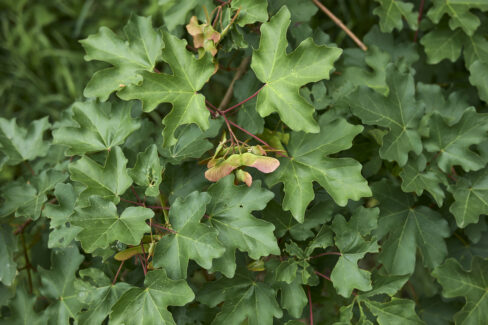
- Hedge Maple: These are smaller with three to five lobes and rounded notches. They usually turn yellow or orange in autumn. If you break a leaf stem, you’ll see a milky sap inside.
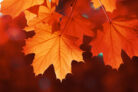
- Norway Maple: These have that classic hand-shaped, five-lobed look with rounded notches. They start off golden yellow in the fall and turn a stunning bright red. Both the leaves and young twigs contain milky sap.
Flowers and Bloom Times
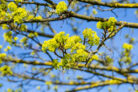
- Sycamore Maple: Blooms in May, right as the leaves are coming out. Look for yellow-green clusters hanging down.
- Hedge Maple: Blooms May through June alongside the new leaves. The flowers are a subtle yellow-green and are packed with nectar for the bees.
- Norway Maple: These show up early (April to May) before the leaves even appear. They look similar to Hedge Maple flowers but grow in upright clusters.
Fruit and Seeds
- Sycamore Maple: Seeds ripen late summer to early fall. The “wings” on the seeds form a sharp V-shape.
- Hedge Maple: Seeds ripen in September or October. The little nutlets have a fuzzy gray texture, and the wings spread out almost perfectly flat.
- Norway Maple: These ripen in October. The winged seeds sit at a very wide angle, almost straight across.
Pro Tip:
While Sycamore and Norway Maples can tower up to 100 feet with big, rounded canopies, the Hedge Maple stays much smaller—usually under 50 feet. Because it handles pruning so well, it’s a favorite for privacy hedges.
Identifying Asian Maples
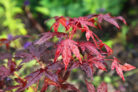
Asian maples are the superstars of the ornamental world and are perfect for growing in pots. If you have one, you probably already know the variety, but generally speaking, most Asian maples have deeply “cut” or lacy leaves with jagged edges.
The Japanese Maple has leaves that look a bit like our local varieties, but the bright red stems are a dead giveaway. And if you see a variety like the ‘Sango-kaku,’ you can’t miss its signature coral-red bark!