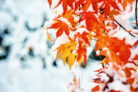
Trees have some pretty clever ways of grabbing our attention, don’t they? While we might never know exactly why one specific maple decided to rock a bright red coat, one thing is for sure: as gardeners, we get to reap the rewards! The best part? This stunning ornamental tree is surprisingly low-maintenance.
The ‘Sangokaku’ Japanese Maple (Acer palmatum)
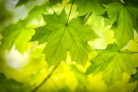
Hailing from Japan, the ‘Sangokaku’ Japanese Maple (often called the Coral Bark Maple) is famous for its striking coral-red trunk and branches. To make things even prettier, it features bright green leaves with delicate reddish edges. It grows in a graceful, upright silhouette and stays fairly compact—usually topping out at around 10 feet tall and wide—making it a perfect fit for smaller yards. It’s even happy in a 2.5-gallon (10-liter) container with good drainage, thanks to its shallow root system.
Quick Heads-up:
If you see red bark on other types of maple trees, especially in the fall, it might not be natural. In those cases, it’s often a sign of a fungal infection rather than a beauty feature.
Finding the Perfect Spot
Whether you’re planting it in a garden bed or keeping it on the balcony, this maple is a bit particular about its home. If it’s not happy, you might see brown leaves or stunted growth. Here’s what it needs:
- A spot protected from harsh winds
- Full sun to partial shade (but try to avoid that scorching direct midday sun)
- Loose, well-draining, and nutrient-rich soil
- An acidic pH level between 5 and 6.5
Pro Tip:
Even if you’ve found the perfect location, wait until spring to plant. This variety is a bit sensitive to frost, so spring gives it the best head start.
Caring for Your Japanese Maple
Once you’ve got the location dialed in, the actual “work” is pretty minimal:
- Keep the soil consistently moist (but not soggy).
- For potted trees, fertilize from March through August.
- Use a standard liquid fertilizer for containers.
- For trees in the ground, fertilize in the spring and fall.
- Leaf compost or horn shavings work great for garden beds.
- Prune only if necessary, ideally in the spring after the new growth appears.
Winter Protection is a Must
Since this maple is a little tender when it comes to freezing temps, it can stay outside, but it needs a warm “winter coat” to survive the chill:
- Wrap the crown in breathable garden fleece during its first few years.
- Wrap pots in bubble wrap, coconut mats, or fleece.
- Place the pot on an insulating base like wood or Styrofoam.
- In the garden, apply a thick layer of mulch over the root zone.
- Don’t forget to water it on frost-free days so it doesn’t dry out!