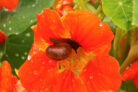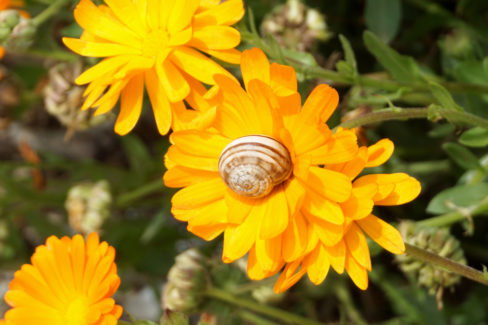
If you’ve ever walked out to your garden in the morning only to find your Marigolds reduced to a few sad, naked stems, you know exactly who the culprits are: slugs. These slimy garden guests absolutely love the scent of Marigolds (often called *Tagetes* in the gardening world), and they’ll crawl a long way just to get a taste. While seeing your hard work munched away is enough to make any gardener want to cry, there’s actually a silver lining to this situation.
A Scent They Can’t Resist
Marigolds are famous for their intense, pungent fragrance. While we might find it refreshing or earthy, slugs find it irresistible—it’s basically a dinner bell for them. Slugs have a much more sensitive “nose” than we do, and they can pick up the scent of a Marigold from several yards away, heading straight for it like it’s a five-star buffet.
Using Marigolds as a Natural Slug Trap
The secret to using Marigolds against slugs is to treat them as a “trap crop.” By lureing the slugs to the Marigolds, you keep them busy and full so they leave your other precious plants alone. Whether this works 100% depends on how bad your slug problem is and whether you have just one lonely Marigold or a whole squad of them acting as a decoy.
Keep in mind that Marigolds aren’t winter hardy in most US climates, and overwintering them usually isn’t worth the effort for most varieties. To make sure you have a fresh “slug defense” every year, you can harvest the seeds in the fall to propagate them again next spring.
Pro Tip:
If you’re feeling brave, grab a flashlight after dark and head out to your Marigolds. You can hand-pick the slugs right off the plants. Just make sure to relocate them a few hundred yards away, or they’ll find their way back home!
Strategic Planting for the Best Defense
To turn your Marigolds into a true garden ally, you need a bit of a game plan:
- The more plants you have, the better the defense.
- Start your seeds indoors as early as February by pre-growing them or sowing them in trays.
- Wait for the planting season to be completely frost-free.
- Move them into the garden starting in mid-May, choosing a sunny location.
- Alternatively, you can direct-sow seeds in late April or just buy starts from your local nursery.
- Place them close to the plants you want to protect.
- Use low-growing varieties as a protective border around your flower beds.
Note:
Marigolds are also great for soil health! They produce substances that can kill off harmful nematodes, making them a fantastic choice for rehabilitating tired garden patches.
But What if You Want to Protect the Marigolds?
Maybe you aren’t using them as decoys—maybe you just love their beautiful (and sometimes edible!) blooms. If you want to make sure your blooming season isn’t cut short by hungry slugs, here’s how to keep the plants themselves safe:
- Create a protective ring around the base of the plant.
- Use materials like sawdust, rock dust, or garden lime.
- Remember to refresh these barriers after every rainstorm.
- Alternatively, install a physical slug fence.
Just a heads-up: if you plant a massive amount of Marigolds, that enticing scent might be so strong it attracts slugs from your neighbor’s yard too. You might end up with a bit of a slug migration!