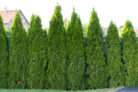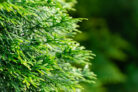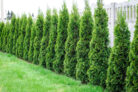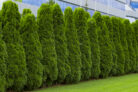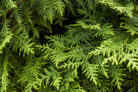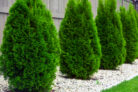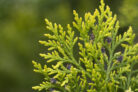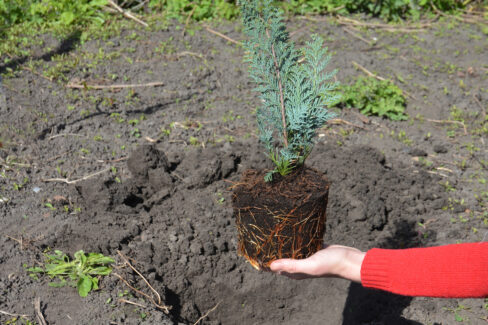
The ‘Emerald Green’ Arborvitae (Thuja Smaragd) is a real showstopper with its deep green needles and elegant, shimmering shape. While it grows a bit slower than other arborvitae varieties—meaning it takes a little longer to fill out into a dense hedge—the payoff is a much more decorative, polished look. Whether you’re looking for a privacy screen or a standout specimen, here’s how to get yours in the ground the right way.
What should you keep in mind when planting an ‘Emerald Green’ Arborvitae?
The ‘Emerald Green’ is a fan favorite for a reason. Because it has a more slender growth habit, it doesn’t provide a 100% solid wall of privacy as quickly as some of its cousins, making it a fantastic choice for a standalone accent plant or a more manicured hedge. Regardless of how you use it, you’ll want to nail these three things:
- The right location
- The perfect planting time
- Proper spacing
Where is the best spot to plant an ‘Emerald Green’ Arborvitae?
If you want healthy growth, picking the right home for your tree is non-negotiable. Put it in the wrong spot, and your arborvitae might struggle or even die off early. Here’s what this tree is looking for:
- Full sun to partial shade
- A spot protected from harsh, drying wind tunnels
- Well-draining, moist soil
- Soil that isn’t too acidic (check your soil type here)
When is the best time of year to plant?
Ideally, you’ll want to get your ‘Emerald Green’ in the ground during the spring (think April or May), once the soil has thawed out and started to warm up. Fall is also a great option! Just keep in mind that young trees aren’t fully winter-hardy yet, so you’ll need to protect them with a good layer of mulch before the first freeze. Pro tip: Try to plant on a cloudy day to prevent the roots from drying out or getting “sunburned” during the process.
How much space should you leave between plants?
If you’re planting a hedge, you’ll want to space your trees at least 24 inches apart, though 30 inches is even better to give them room to breathe. If you’re planting one as a standalone feature, give it at least 3 feet of clearance from other plants. Don’t forget to check your local property lines and sidewalk setbacks before you start digging!
How do you actually plant an arborvitae?
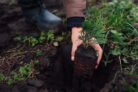
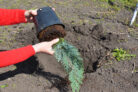
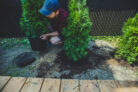
To figure out exactly how many trees you need for a hedge, it helps to mark the line with stakes and string first. About 24 hours before you plan to plant, place the root balls in a bucket of water so they can hydrate. While they soak, you can prep the site:
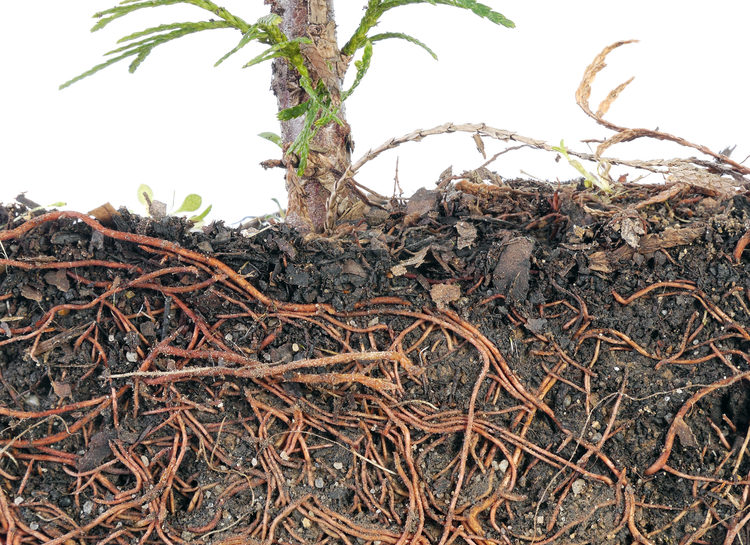
- Dig a hole that is twice as wide as the root ball.
- Clear out any weeds or large rocks from the soil you dug out.
- Mix some compost or well-rotted manure along with some organic fertilizer (like horn meal) into the soil.
- Loosen the soil at the bottom of the hole. If your dirt is really heavy or compacted, mix in some gravel to help with drainage.
Once you’ve carefully placed your ‘Emerald Green’ in the hole and filled it back in, gently tamp down the earth to remove air pockets. Give it a deep watering immediately, and keep the soil consistently moist over the next few days as it settles in.