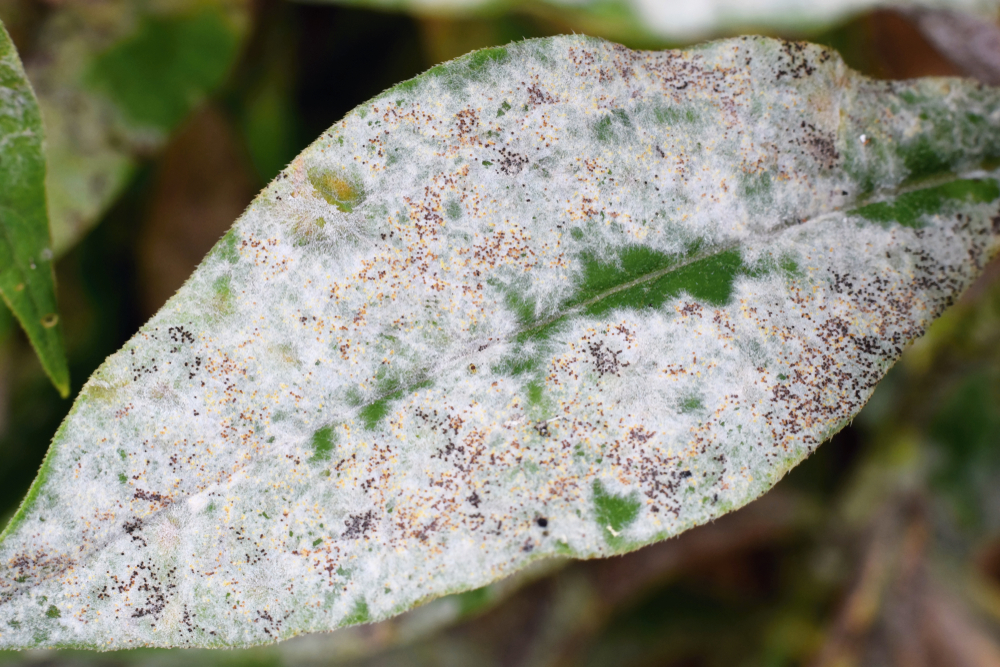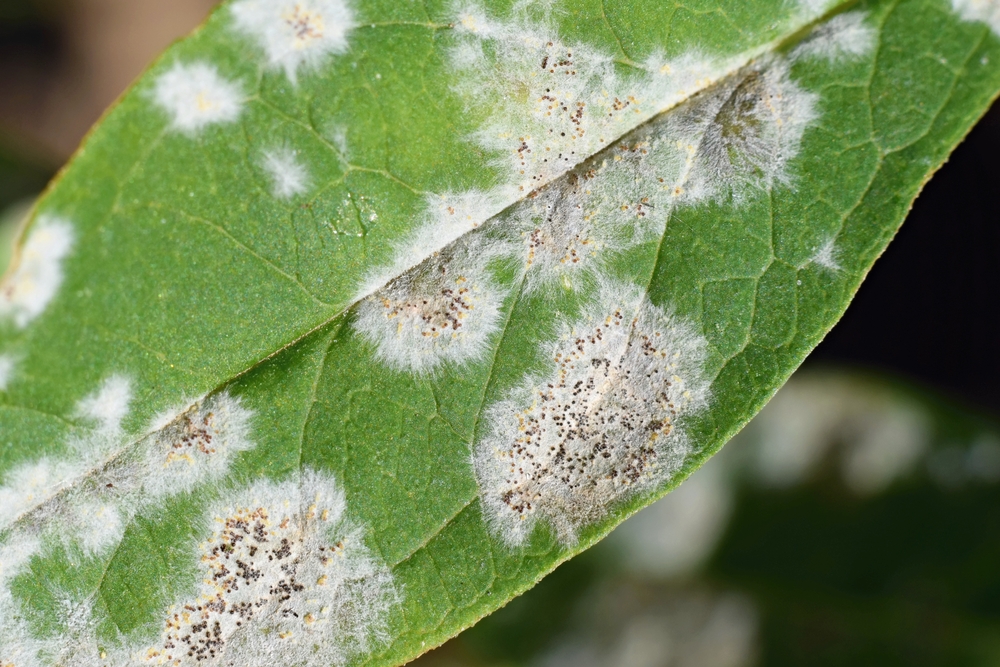
Serviceberries (also known as Juneberries) are gorgeous, but they do have a bit of a reputation for being magnets for powdery mildew. Gardeners often call this a “fair-weather disease” because it tends to pop up right when the weather gets dry and sunny.
Spotting and Treating Powdery Mildew
While downy mildew loves warm, humid conditions, powdery mildew is the opposite—it thrives when things are hot and dry. This fungal infection is pretty easy to spot: look for a white or grayish coating on the leaves that looks like someone dusted them with ash. You’ll mostly see it on the tops of the leaves, but it can also spread to the stems and even the berries.
The good news is that a healthy serviceberry can usually handle an infection without too much drama. However, it’s still not great for the plant’s overall health. If left unchecked, you might notice:
- Stunted or sluggish growth,
- Flowers that look shriveled or fail to bloom properly,
- Leaves curling up, drying out, and dropping early.
If you spot it, your best bet is to prune away any infected branches and leaves. Just a quick tip: toss those clippings in the trash, not the compost pile, so you don’t accidentally spread the spores around your garden!