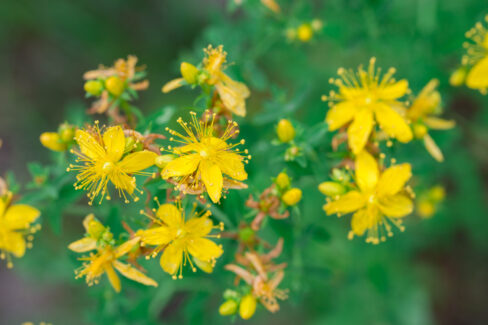
Most of us know St. John’s Wort as a powerhouse in the world of herbal medicine. While the common variety grows wild across the countryside and handles our chilly winters like a pro, many of the varieties we plant in our gardens actually come from much warmer climates. If you’re wondering how your plants will hold up when the temperature drops, here’s the lowdown on their frost resistance.
Family Members with Great Winter Hardiness
Common St. John’s Wort (Hypericum perforatum) isn’t the only member of the family that can handle a permanent spot in your garden year-round. If you’re looking for varieties that can brave the winter outdoors, these are some of your best bets:
- Hairy St. John’s Wort (Hypericum hirsutum)
- Mountain St. John’s Wort (Hypericum montanum)
- Tutsan (Hypericum androsaemum)
- Square-stalked St. John’s Wort (Hypericum tetrapterum)
- Goldcup St. John’s Wort (Hypericum x patulum)
- Moser’s St. John’s Wort (Hypericum moserianum)
- Kalm’s St. John’s Wort (Hypericum kalmianum)
- Aaron’s Beard (Hypericum calycinum)
- Creeping St. John’s Wort (Hypericum polyphyllum)
- Slender St. John’s Wort (Hypericum pulchrum)
- Mount Olympus St. John’s Wort (Hypericum olympicum)
Young Plants and Harsh Winters
Just like us, young plants are a bit more sensitive to the cold than the “grown-ups.” If you’ve been propagating your own plants indoors, wait until May to move them outside. For at least their first year, they’ll need a little extra help to overwinter safely. Before the first frost hits, give them a cozy blanket of:
- Dry leaves
- Brushwood or evergreen branches
- Compost
Even if your plants are older, it’s a good idea to use these protective measures if you live in a region with particularly brutal winters.
Pro Tip:
Check if your specific variety benefits from being pruned before winter. For example, Goldcup St. John’s Wort can become much more susceptible to cold and rot if you cut it back too early.
St. John’s Wort in Containers
If you’re growing St. John’s Wort in pots, they can stay outside, but they’ll need a bit of insulation. Wrap the pot in burlap or garden fleece and tuck it against a sheltered wall to block the wind. Don’t forget to give your “wrapped” plants a little sip of water every now and then during the winter months!
Sensitive Varieties to Watch Out For
Some varieties, like Lemon St. John’s Wort, Egyptian St. John’s Wort, or Balearic St. John’s Wort, come from regions with very mild winters. Their winter hardiness isn’t quite up to par for colder climates. If you’re trying out a rarer species, always check its origin—it’s the best clue for how much cold it can take. When in doubt, keep these sensitive types in pots so you can move them to a protected indoor spot for the winter.
Pro Tip:
For a quick look at the different characteristics of this plant, plus tips on growing and harvesting, check out our St. John’s Wort Fact Sheet.