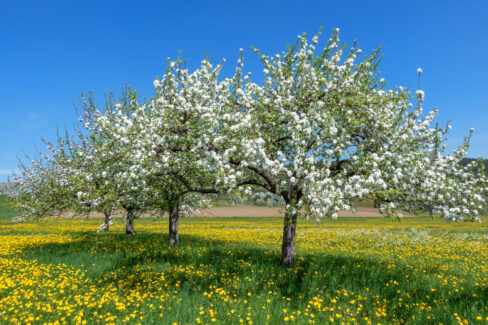
Every season brings its own set of chores to the garden. Even when things seem quiet, there’s usually something to do for your apple trees! From spring blossoms to winter pruning, here’s a breakdown of what your apple tree needs throughout the year.
Apple Trees in the Spring
- Spring is when the magic happens: those tiny buds finally transform into beautiful blossoms.
- Now is the perfect time to set up insect hotels. You want to invite as many bees and bumblebees as possible to help with pollination.
- Give your tree a nutritional boost by working some well-rotted manure or compost into the soil around the base (the tree disk) in March or May. It’s the perfect “breakfast” to start the growing season.
- While fall is generally great for planting, if you live in an area with brutal winter frosts, planting in the spring is actually the safer bet to help the tree get established.
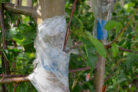
- If you’re looking to propagate a specific variety, spring (April to May) is the window for grafting. “Bark grafting” is one of the easiest ways to do this.
- Don’t forget the initial pruning! If you plant your tree in the spring, you should give it its first structural trim immediately after putting it in the ground.
Apple Trees in the Summer
- Summer Grafting: “Budding” (or inoculation) is a popular summer technique. It’s great for propagating young plants or even adding a second apple variety to an existing older tree.
- Keep an eye out for “water sprouts” (those vertical shoots that suck up energy). Summer is a good time to thin these out or fix any pruning mistakes from earlier in the year.
- By late August, the wait is finally over—you can start harvesting the first early summer apples!
Apple Trees in the Fall
- While you’re enjoying the harvest, the tree is already thinking ahead, forming the buds that will become next year’s flowers.
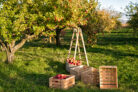
- It’s prime time for harvesting autumn apples.
- Make sure to get your winter apple varieties picked by the end of October.
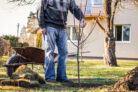
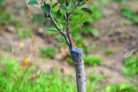
- Generally speaking, fall is the absolute best time to plant a new apple tree. Bare-root or root-balled trees do best when planted between late October and mid-November.
- If you’re planting larger trees, make sure to stake and tie them securely so they don’t get whipped around by winter winds.
- If you have an old apple tree that’s seen better days, you can start the rejuvenation process. Just remember: a major overhaul should be done gradually over several years.
- For storage, apples love a cool spot (around 40°F/5°C) with high humidity. A little ventilation now and then helps prevent rot.
- If you’re growing apple trees in pots, make sure to winterize them before the first hard frost hits.
- Whitewashing the trunk before winter is a pro move. It protects the bark from “frost cracks” caused by temperature fluctuations.
Apple Trees in the Winter
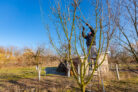
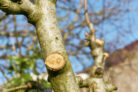
- Once the leaves are gone, you can really see the “skeleton” of the tree. This makes winter the ideal time for pruning. Aim to get your trimming done between November and March.
- Enjoy those winter apples you’ve put into storage.
- Pro tip: There’s nothing better on a cold day than a warm, baked apple straight from the oven!